• Journal
    • Journal Issues
      • Current Issue – Issue #14
      • Issue #13
      • Issue #12
      • Archive
    • About the Journal
      • Aims and Scope
      • Author Guidelines
      • People
      • Ethics
    • Journal Search
      • Search all Journal Articles
  • Projects
    • Research Projects
      • Stedelijk Studies Masters
      • Mortality as Matter
      • Here for Now, Then and There
      • Sketches For The Future
      • Lines of Sight
      • Staff Shares
      • Rakurs
    • Fellowships
      • MMCA Studies x Stedelijk Studies Editorial Fellowship
      • Stedelijk x C& Editorial Fellowship
      • Editorial & Research Fellowships & Fellows
    • Exhibitions
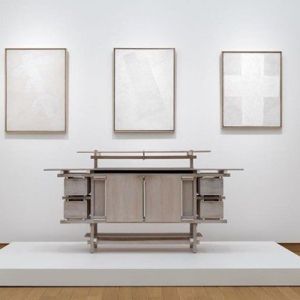
      • MODERN — Van Gogh, Rietveld, Léger and others
      • Exhibition Felix de Rooy — Apocalypse
      • IT’S OUR F***ING BACKYARD
      • Surinamese School
    • Szine
      • Szine is an irregularly published zine that shares pressing research on the subjectivity of the museum in the cultural landscape
    • All projects
      • Ranging from brisk exhibitions to long-term research initiatives, encompassing Szine and Stedelijk Museum Fellowships
  • Research Logs
  • Essays
  • Conversations
  • About
    • About Stedelijk Studies
    • Collaborations
    • People
    • Contact
  • Search
  • Menu Menu
  • Link to Instagram Link to Instagram Link to Instagram

Call for Research

Stedelijk  Studies Journal  #14: “Amsterdam: Reconsidering the Transnational”

Submission deadline:  March 20, 2023

The postwar artistic ecosystem of Amsterdam has often been characterized by its diverse international perspectives facilitated through Dutch institutions. In recent years, the Stedelijk Museum Amsterdam has expanded its global purview through new acquisitions, thematic exhibitions, and cross-institutional initiatives primarily focused on the Global South. Between 2013 and 2015, the programme “Global Collaborations” established networks between the Stedelijk and what it referred to as “upcoming” Global South regions.

Presently, “Everyday, Someday and Other Stories: Collection 1950-1980” is narrating “different stories from diverse perspectives” via a more global presentation of the permanent collection. The museum’s interest in the international is nothing new, as attested by exhibitions from the late 1980s and early 1990s that coincided with the fall of Communism and the very condition of “globalization”. Wim Beeren’s “U-ABC: schilderijen, beelden, fotografie uit Uruguay, Argentinië, Brazilië, Chili” served as one of several institutional affirmations (by way of a contemporary art exhibition) of the new democracies in the Southern Cone. 1991’s “Wanderlieder,” which commingled thirteen Eastern and West European artists, anticipated the end of the U.S.S.R. by eight days.

For Issue 14 of the Stedelijk Studies Journal we aim to critically reframe discussions on global art and the “transnational” with the question: what might a decolonized understanding of transnational and transcultural Amsterdam, and the Netherlands more broadly, look like?

Such a framework and critical orientation might attend to how the art world’s contemporary embrace of the global has been part and parcel of neoliberal extraction, via foreign capital, as much as it has drawn more attention to collaborations across borders that have advanced modern and contemporary art experimentation. Yet it also opens up the possibility of drawing attention to long-neglected histories in parallel with developments in art or design, such as decolonization and independence movements in Indonesia, Suriname and the Antilles. Among others, one thinks of the self-taught artist Oey Tjeng Sit, Stanley Brouwn or Armand Baag, who arrived to the Netherlands in 1961 and was instrumental in the establishment of Maysa Foundation and Srefidensie Gallery (1971) as key sites supporting Caribbean artists in Amsterdam. In the present, contemporary artist collectives use the possibilities of intersectional environments or virtual platforms to indicate new avenues of global engagement.

In our call for research, we invite proposals that examine artists, collectives, exhibitions, and spaces (independent and institutional) that reconsider the transnational histories and present nows of art in Amsterdam and the Netherlands. We seek ideas that address the complex, alternative, artistic and curatorial experiments that concentrate on a diverse range of practitioners in the postwar and contemporary era, many of who hailed from countries in the Global South and outside of Europe. Complementing previous issues of Stedelijk Studies Journal on global art history and museum practice such as #01 “Collecting Geographies: Global Programming and Museums of Modern Art,” #06 “The Borders of Europe,” and #09 “Modernism in Migration,” Issue 14 will ask how might artistic-research and emerging scholarship further complicate our very notion of the transnational as an art-historical paradigm and/or method—and, indeed, “Dutch” as a stable signifier of national identity for cultural practitioners?

Stedelijk Studies invites proposals that examine artists, collectives, spaces (independent and institutional) and exhibitions that were formative to this history of art in Amsterdam and the Netherlands.

Topics could include, but are not limited to:

  • International, transnational and/or itinerant artists who were decisive to Amsterdam and/or the Netherlands from 1945 to the present.
  • Alternative, independent or institutional art spaces, associations and networks working across artistic and political solidarity with the Netherlands.
  • Transnational and international exhibition histories in Dutch museums and art spaces
  • Institutional and state-funded initiatives (for example, Dutch Visual Arts Program, Jan van Eyck Academie, De Appel) that abet international artistic activity in the Netherlands.
  • New conceptualizations and forms of transnationalism in Dutch collections or across other contexts
  • Processes of artistic decolonization and migration from former Dutch colonies
  • Historic and present practices of artistic mobilization around sexuality and gender
  • Transnational, exilic or diasporic experiences of artists in the Netherlands from the former colonies or other locations in the Global South

Process

All accepted submissions are subject to scholarly or artistic peer review, and all contributors must be open to receive such feedback and work collaboratively toward a final version.

As a way to open up the peer-reviewed process further we will compensate published submissions with a fee of 400 EUR (excl. VAT).

Submission

Please send abstracts and artistic proposals (max. 300 words and optionally max. 5 images) and CV (merged in one PDF file) to stedelijkstudies [at] stedelijk.nl by March 20, 2023.

About

The Stedelijk Studies Journal is a high-quality, peer-reviewed academic journal published by the Stedelijk Museum Amsterdam. Issue 14 will be co-edited by Dr. Elize Mazadiego and Dr. Daniel Quiles, with Dr. Charl Landvreugd serving as editor-in-chief.

The journal comprises research related to the Stedelijk collection, exploring institutional history, museum studies, and current topics in the field of art and design. All accepted submissions are subject to scholarly or artistic peer review, and all contributors must be open to receive such feedback and work collaboratively toward a final version.

FANDANGOS NR. 6 Editors: Raul Marroquin and Marjo Schumans. Publisher: Agora Studio. Printer: Jan van Eyck Academie. Donation Artists’ Books Johan Deumens, Landgraaf.
FANDANGOS NR. 6 Editors: Raul Marroquin and Marjo Schumans. Publisher: Agora Studio. Printer: Jan van Eyck Academie. Donation Artists’ Books Johan Deumens, Landgraaf.

FANDANGOS NR. 6 Editors: Raul Marroquin and Marjo Schumans. Publisher: Agora Studio. Printer: Jan van Eyck Academie. Donation Artists’ Books Johan Deumens, Landgraaf.

Call for Research Archive

Stedelijk Studies Masters 2026
May 1, 2026/by Stedelijk

Call for Submissions: Stedelijk Studies Masters 2026

Stedelijk Studies #15: Audiences for Contemporary Art Museums
June 13, 2024/by Stedelijk

Call for Research  Stedelijk  Studies Journal  #15

Submission deadline: September 2, 2024
Stedelijk Studies Master’s Research
May 1, 2024/by Stedelijk

Stedelijk Studies Masters

Stedelijk Studies is currently welcoming Master’s Theses on and relating to the Stedelijk Museum Amsterdam and its collection.
FANDANGOS NR. 6 Creators: Raul Marroquin - editor, Marjo Schumans - editor, Agora Studio - publisher, Jan van Eyck Academie - printer. Donation Artists' Books Johan Deumens, Landgraaf.

December 19, 2022/by Stedelijk

Call for Research  Stedelijk  Studies Journal  #14

Submission deadline:  March 20, 2023
AnnaMaria Pinaka, “untitled” (part of series Thirsty Pig), 2022. Ink and watercolors. Photo by AnnaMaria Pinaka.
July 26, 2022/by Stedelijk

Call for Research  Stedelijk  Studies Journal  #13

*CLOSED*
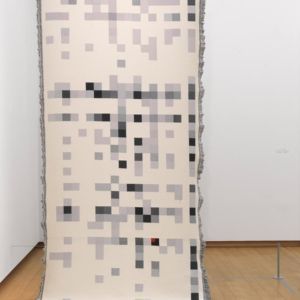
Design by Rossella Biscotti, executed by Textiellab Tilburg, 10 x 10 (Acquired Nationality), 2014. Stedelijk Museum Amsterdam, object no. 2015.1.0418(1-2).
January 31, 2022/by Stedelijk

Call for Research  Stedelijk  Studies Journal  #12

*CLOSED*
Figure 3b. Detail
December 11, 2020/by Stedelijk

Call for Papers – Stedelijk Studies Spring 2021

*CLOSED*
Stedelijk Studies Spring 2020 – Call for Papers
May 6, 2019/by Editor

Stedelijk Studies Spring 2020 – Call for Papers

*CLOSED*
January 15, 2019/by Editor

Stedelijk Studies Fall 2019 – Call for Papers

*CLOSED*
July 10, 2018/by Editor

Stedelijk Studies Summer 2019 – Call for Papers

*CLOSED*
November 17, 2017/by Editor

Stedelijk Studies Summer 2018 – Call for Papers

*CLOSED*
January 13, 2017/by Editor

Stedelijk Studies Summer 2017 – Call for Papers

*CLOSED*
February 1, 2015/by Stedelijk

Stedelijk Studies Fall 2015 Performance – Call for Papers

*CLOSED*
Photo: Gert-Jan van Rooij
October 28, 2014/by Stedelijk

Stedelijk Studies Fall 2016 – Call for Papers

*CLOSED*

Journal Archive

Explore the Stedelijk Studies Journal Archive.

Call for Research Archive

Find Call for Research Archive here.

Newsletter

Subscribe to Stedelijk Museum’s Academic Newsletter.

Share this page

  • Facebook Facebook Share on Facebook
  • Whatsapp Whatsapp Share on WhatsApp
  • Pinterest Pinterest Share on Pinterest
  • Linkedin Linkedin Share on LinkedIn

Stedelijk Studies on Instagram

Connect to Stedelijk Studies on Instagram

Subscribe to the Stedelijk Museum Academic Newsletter

Get the latest research, insights, and updates from Stedelijk Studies. Subscribe to the Stedelijk Museum’s Academic Newsletter.

© 2026 Stedelijk Studies.
  • Link to Instagram Link to Instagram Link to Instagram
  • Disclaimer
  • Colophon
  • Contact
  • Cookie Policy
  • Privacy Statement
Scroll to top Scroll to top Scroll to top
Stedelijk Studies
Manage Consent
To provide the best experiences, we use technologies like cookies to store and/or access device information. Consenting to these technologies will allow us to process data such as browsing behavior or unique IDs on this site. Not consenting or withdrawing consent, may adversely affect certain features and functions.
Functional Always active
The technical storage or access is strictly necessary for the legitimate purpose of enabling the use of a specific service explicitly requested by the subscriber or user, or for the sole purpose of carrying out the transmission of a communication over an electronic communications network.
Preferences
The technical storage or access is necessary for the legitimate purpose of storing preferences that are not requested by the subscriber or user.
Statistics
The technical storage or access that is used exclusively for statistical purposes. The technical storage or access that is used exclusively for anonymous statistical purposes. Without a subpoena, voluntary compliance on the part of your Internet Service Provider, or additional records from a third party, information stored or retrieved for this purpose alone cannot usually be used to identify you.
Marketing
The technical storage or access is required to create user profiles to send advertising, or to track the user on a website or across several websites for similar marketing purposes.
  • Manage options
  • Manage services
  • Manage {vendor_count} vendors
  • Read more about these purposes
View preferences
  • {title}
  • {title}
  • {title}