• Journal
    • Journal Issues
      • Current Issue – Issue #14
      • Issue #13
      • Issue #12
      • Archive
    • About the Journal
      • Aims and Scope
      • Author Guidelines
      • People
      • Ethics
    • Journal Search
      • Search all Journal Articles
  • Projects
    • Research Projects
      • Stedelijk Studies Masters
      • Mortality as Matter
      • Here for Now, Then and There
      • Sketches For The Future
      • Lines of Sight
      • Staff Shares
      • Rakurs
    • Fellowships
      • MMCA Studies x Stedelijk Studies Editorial Fellowship
      • Stedelijk x C& Editorial Fellowship
      • Editorial & Research Fellowships & Fellows
    • Exhibitions
      • MODERN — Van Gogh, Rietveld, Léger and others
      • Exhibition Felix de Rooy — Apocalypse
      • IT’S OUR F***ING BACKYARD
      • Surinamese School
    • Szine
      • Szine is an irregularly published zine that shares pressing research on the subjectivity of the museum in the cultural landscape
    • All projects
      • Ranging from brisk exhibitions to long-term research initiatives, encompassing Szine and Stedelijk Museum Fellowships
  • Research Logs
  • Essays
  • Conversations
  • About
    • About Stedelijk Studies
    • Collaborations
    • People
    • Contact
  • Search
  • Menu Menu
  • Link to Instagram Link to Instagram Link to Instagram
CALL FOR PAPERS IS CLOSED

Stedelijk Museum Amsterdam 125 Years

21st Century Challenges for the Museum of Modern and Contemporary Art and Design

Museum for Asian Art in the garden room of the Stedelijk Museum, Amsterdam, in the foreground, left and right, l, respectively Hindu-Javanese stonework and a Javanese mask. Ill. from: Maandblad voor Beeldende Kunsten, June 1934.

Museum for Asian Art in the garden room of the Stedelijk Museum, Amsterdam, in the foreground, left and right, l, respectively Hindu-Javanese stonework and a Javanese mask. Ill. from: Maandblad voor Beeldende Kunsten, June 1934.

DOWNLOAD PDF

Theme Outline

On the 14th of September 2020 the Stedelijk Museum celebrated its 125th anniversary. Stedelijk Studies is taking this opportunity to analyze, reflect, and speculate on the historical, current, and future state of the modern and contemporary art and design institution, seeking to both learn from its past and define its prospective tasks. Within today’s globalized art world, ideas about what and how museums of modern and contemporary art and design collect, exhibit, and address their audiences are changing. These institutions are critically discussed and problematized as Eurocentric and predominantly white institutions, insufficiently aware of, or insufficiently apt to respond to, the interdependences between modernism and colonialism, as well as how such interdependences intersect with other concerns of critical discourses. Topics such as diversity and inclusion, migration, decolonization, digitization, and globalization, which have become central to museological discourse, need to be considered in reflections on the challenges the Stedelijk will meet as a museum of the 21st century.

For its eleventh issue, Stedelijk Studies calls for contributions that develop new perspectives on the museum’s 125-year existence. What are the defining moments of its history, and where should it be heading in the future? Should its defining moments be reconsidered? Are there other, heretofore overlooked, moments that deserve more attention and recognition?

Since its inauguration as Amsterdam’s municipal museum in 1895, various directors and curators have had an impact on the acquisition and exhibition policies of the museum, and the voices of both critics and the public have colored its story. The story goes, for example, that the Stedelijk’s status as a museum of modern and contemporary art and design was only gained after World War II, when Willem Sandberg became its director. But is this narrative entirely correct? As early as 1928 Alfred Barr praised the Stedelijk for being a museum where national and international contemporary art is exhibited, arguing that “[n]either is at present possible in American museums.”

And does the idea of the Stedelijk, as a bastion of modernism, obscure a fuller view of its founding and other early activities? For instance, between 1932 and 1952 those who witnessed the first exhibitions of Picasso, Mondrian and Matisse could become equally immersed in historic artefacts from the Dutch East Indies, China, Japan, and India in the Museum for Asian Art, housed in what was then the Garden Room of the Stedelijk. After World War II, the Stedelijk also organized surveys of contemporary art from Haïti, various African countries, and Israel. However, these exhibitions did not prelude extensive representations from these areas in its collections.

The Stedelijk has gone through many phases and transformations, influenced by developments in (city) politics, art (history), society, and public opinion. While the 21st century is unfolding, a more critical approach towards the museum practices is necessary.

Internally, the Stedelijk has recently undergone intense debate on various topics, ranging from managerial issues and ethical codes concerning conflicts of interests, to inclusivity with regards to its museum operations, staff, collection, and educational activities. As in many other museums, both internal and public discussions are taking place—and will have to be continued—on how to expand the canons in its collection, which includes the question of how to decolonize (or ‘demodernize’, as coined by Charles Esche) a collection that consists mainly of art and design from Europe and the United States. Decolonization, however, concerns not only Anglo-American and European art and design museums, but is a global phenomenon. Museum institutions are reconsidering the historical and geopolitical factors that have informed their collection and exhibition policies, as well as their very existence as a cornerstone of the colonization and modernization project.

Funding models are another important topic in the museum world today. As a result of substantial budget cuts in public funding, the Stedelijk, like many museums worldwide, has in recent years increased its visitor revenue, as well as the share of private funding in its budget, which brings with it a whole set of ethical questions, as well as a financial vulnerability of a new kind, as was laid bare by the Covid-19 pandemic. At the same time, the Stedelijk Museum falls primarily under the supervision and governance of the municipality. This means that, in addition to acting on the global stage, the Stedelijk must also take into account municipal politics, as well as the social and cultural needs of the people of Amsterdam, including the local art and design scenes. Other museums have their own histories and relations with local and global funding structures, but the general trend worldwide is increasingly complex partnerships (including franchising) between museums and the commercial world, which altogether pose ethical challenges and concerns about the historical, current, and future relation between museums, money, and power.

In addition, Stedelijk Studies encourages contributions on (or related to) other museums around the globe facing similar challenges. The ICOM Kyoto General Conference (September 1–7, 2019) thoroughly investigated the global museum landscape in search of a new museum definition and mission better equipped to respond to the demands of our time. While the proposed new museum definition has triggered an ongoing debate around the world, with both supporters and opponents voicing their views, it is clear that the purposes, functions, and responsibilities of the museum (including the museum of art) are currently being challenged.

Stedelijk Studies encourages proposals that invite critical discussion on such issues currently dominating the art, design, and museum world. The specific circumstances of the Stedelijk necessitate an analysis of its position on a local, national, and international level in comparison to other museums of similar size and status in various parts of the world.

Authors are invited to reflect on the position of the museum of modern and contemporary art and design within these varying contexts, and to address possible future models for (the concept of) the museum, with respect to their diverse histories and collections. We encourage scholars from various disciplines to offer distinctive views on one or more of the topics outlined below, using innovative, explorative, and experimental methodologies and research approaches.

Possible questions and topics could include, but are not limited to:

  • To what extent can the museum of modern and contemporary art be a trendsetter of the new, now other players in the cultural field seem better equipped to fulfill this role?
  • How can the museum service society and facilitate insights acquired by groups and individuals within it?
  • How can museums of modern and contemporary art and design become instigators of change, and strive for new ethical standards and innovative museum practices?
  • Should a museum take a position within public debates or should it support multivocality?
  • How will the new museum definition relate to (the disproportionalities of) the extant collection?
  • What does decolonization mean for museums of modern and contemporary art and design globally, including the Stedelijk? Are there any best practices for collection policy and curatorial strategies? Are these culturally specific?
  • Apart from post-colonial theory, what other theoretical frameworks that set out to develop new ethical standards and innovative museum practices could be analyzed?
  • What is the impact of local politics on museum management? How do other (municipal) museums of modern and contemporary art and design balance the local and the global?
  • Should departmental structures with specialized curators in time periods as well as certain media be considered outdated, or does it still have potential for the future?
  • Can we revisit the Stedelijk’s told and untold histories in order to formulate goals for the future?
  • What models are necessary to develop for the museum to properly engage and accommodate new and diverse audiences?
  • What has artistic and institutional critiques brought to the museum and how do they continue to shape its future?
  • How can private and public funding interests, conventional museum tasks and mass cultural entertainment be balanced while safeguarding autonomy and content?

About Stedelijk Studies

Stedelijk Studies is a high-quality, peer-reviewed academic journal published by the Stedelijk Museum Amsterdam. The journal comprises research related to the Stedelijk collection, exploring institutional history, museum studies (e.g., education and conservation practice), and current topics in the field of visual arts and design.

Submission

The deadline for the abstract (max. 300 words) and CV (merged in one PDF file) has been extended to January 25, 2021 (previously January 11, 2021).

The deadline for the article (4,000–5,000 words) is June 7, 2021 (previouslyMay 29, 2021).

The issue will be published in December 2021.

Please send abstracts and other editorial correspondence to:
[email protected]

*This call for papers is based on a concept developed by esteemed former Stedelijk Studies editorial board members Fieke Konijn and Nathalie Zonnenberg.
Call for Papers Archive

Stedelijk Studies Masters 2026
May 1, 2026/by Stedelijk

Call for Submissions: Stedelijk Studies Masters 2026

Stedelijk Studies #15: Audiences for Contemporary Art Museums
June 13, 2024/by Stedelijk

Call for Research  Stedelijk  Studies Journal  #15

Submission deadline: September 2, 2024
Stedelijk Studies Master’s Research
May 1, 2024/by Stedelijk

Stedelijk Studies Masters

Stedelijk Studies is currently welcoming Master’s Theses on and relating to the Stedelijk Museum Amsterdam and its collection.
FANDANGOS NR. 6 Creators: Raul Marroquin - editor, Marjo Schumans - editor, Agora Studio - publisher, Jan van Eyck Academie - printer. Donation Artists' Books Johan Deumens, Landgraaf.
December 19, 2022/by Stedelijk

Call for Research  Stedelijk  Studies Journal  #14

Submission deadline:  March 20, 2023
AnnaMaria Pinaka, “untitled” (part of series Thirsty Pig), 2022. Ink and watercolors. Photo by AnnaMaria Pinaka.
July 26, 2022/by Stedelijk

Call for Research  Stedelijk  Studies Journal  #13

*CLOSED*
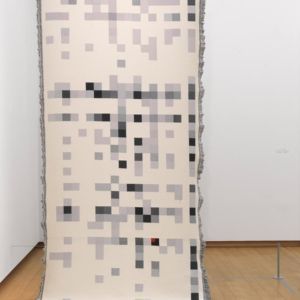
Design by Rossella Biscotti, executed by Textiellab Tilburg, 10 x 10 (Acquired Nationality), 2014. Stedelijk Museum Amsterdam, object no. 2015.1.0418(1-2).
January 31, 2022/by Stedelijk

Call for Research  Stedelijk  Studies Journal  #12

*CLOSED*
Figure 3b. Detail
December 11, 2020/by Stedelijk

Call for Papers – Stedelijk Studies Spring 2021

*CLOSED*
Stedelijk Studies Spring 2020 – Call for Papers
May 6, 2019/by Editor

Stedelijk Studies Spring 2020 – Call for Papers

*CLOSED*
January 15, 2019/by Editor

Stedelijk Studies Fall 2019 – Call for Papers

*CLOSED*
July 10, 2018/by Editor

Stedelijk Studies Summer 2019 – Call for Papers

*CLOSED*
November 17, 2017/by Editor

Stedelijk Studies Summer 2018 – Call for Papers

*CLOSED*
January 13, 2017/by Editor

Stedelijk Studies Summer 2017 – Call for Papers

*CLOSED*
February 1, 2015/by Stedelijk

Stedelijk Studies Fall 2015 Performance – Call for Papers

*CLOSED*
Photo: Gert-Jan van Rooij
October 28, 2014/by Stedelijk

Stedelijk Studies Fall 2016 – Call for Papers

*CLOSED*

Yayoi Kusama

YAYOI KUSAMA
PRE-SALE NOW LIVE
Exhibition — Sep 11, 2026 till Jan 17, 2027

Newsletter

Subscribe to Stedelijk Museum’s Academic Newsletter.

Share this page

  • Facebook Facebook Share on Facebook
  • Whatsapp Whatsapp Share on WhatsApp
  • Pinterest Pinterest Share on Pinterest
  • Linkedin Linkedin Share on LinkedIn

Stedelijk Studies on Instagram

Connect to Stedelijk Studies on Instagram

Subscribe to the Stedelijk Museum Academic Newsletter

Get the latest research, insights, and updates from Stedelijk Studies. Subscribe to the Stedelijk Museum’s Academic Newsletter.

© 2026 Stedelijk Studies.
  • Link to Instagram Link to Instagram Link to Instagram
  • Disclaimer
  • Colophon
  • Contact
  • Cookie Policy
  • Privacy Statement
Scroll to top Scroll to top Scroll to top
Stedelijk Studies
Manage Consent
To provide the best experiences, we use technologies like cookies to store and/or access device information. Consenting to these technologies will allow us to process data such as browsing behavior or unique IDs on this site. Not consenting or withdrawing consent, may adversely affect certain features and functions.
Functional Always active
The technical storage or access is strictly necessary for the legitimate purpose of enabling the use of a specific service explicitly requested by the subscriber or user, or for the sole purpose of carrying out the transmission of a communication over an electronic communications network.
Preferences
The technical storage or access is necessary for the legitimate purpose of storing preferences that are not requested by the subscriber or user.
Statistics
The technical storage or access that is used exclusively for statistical purposes. The technical storage or access that is used exclusively for anonymous statistical purposes. Without a subpoena, voluntary compliance on the part of your Internet Service Provider, or additional records from a third party, information stored or retrieved for this purpose alone cannot usually be used to identify you.
Marketing
The technical storage or access is required to create user profiles to send advertising, or to track the user on a website or across several websites for similar marketing purposes.
  • Manage options
  • Manage services
  • Manage {vendor_count} vendors
  • Read more about these purposes
View preferences
  • {title}
  • {title}
  • {title}