Follow a manual added link
Stedelijk Studies Journal Issue #15
Editorial
by Lora Sariaslan and Patrick Van Rossem
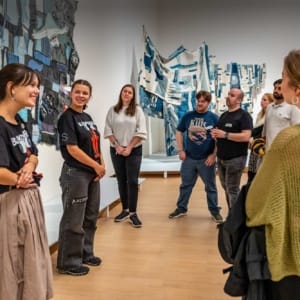
Visitors do not arrive as passive spectators but actively bring their own knowledge and lived experiences to the museum. They move through museums alone or together, lingering, drifting, actively looking, interacting, sometimes participating, forming temporary publics in galleries, auditoria, workshops, and digital platforms. In doing so they do not simply receive culture; they actively shape it through their experience and interaction in institutional spaces.
Museums are undergoing transformation, shaped by evolving expectations, shifting social dynamics, changing economic conditions, and the reconfiguration of cultural politics, as well as by a proliferation of diverse artistic forms and practices. The white cube now coexists with black-box spaces and theaters, archival installations, discursive platforms, educational spaces, and performance spaces. Exhibitions unfold through events, conversations, and collaborative processes, as well as through objects and displays. This development reflects broader cultural shifts in which social reality is increasingly understood as something produced through interaction and negotiation rather than as a fixed framework. Meaning emerges not only through curatorial interpretation but also through dialogue with audiences. Museums are also increasingly shifting from being traditional repositories of objects to becoming community-centered spaces that actively engage with diverse, local audiences. This trend reflects a broader emphasis on inclusion, cocreation, and social relevance, as institutions seek to build meaningful, reciprocal relationships with the communities they serve.
Yet these developments are not merely aesthetic or programmatic. They are also political.
At a time of declining trust in institutions and intensifying political polarization, museums face growing expectations for transparency and accountability. Museum storage facilities have been opened to visitors, archives have become accessible, and institutions have published information about acquisitions, representation, and provenance. Audiences can now encounter debates about colonial histories, restitution, and the structural exclusions embedded in art history and museum collections.
The authority of the museum—once largely taken for granted—is now subject to public scrutiny.
Museums have never been neutral spaces. They are shaped by economic systems, ideological frameworks, and historical inequalities. Their collections reflect the networks of trade, patronage, and cultural hierarchy through which they were formed. Acknowledging these conditions is therefore only a first step. The more pressing challenge lies in reconsidering how institutions can meaningfully exist within the complexities of contemporary society.
Placing audiences at the center of institutional missions requires more than expanded programming or participatory language. It involves structural change. As Sophia Bilotta notes in her contribution, “Placing audiences at the heart of a museum’s institutional mission demands bold, radical decisions and a genuine willingness to change.” Such transformations inevitably generate tensions—they challenge established hierarchies, redistribute authority, and require institutions to rethink how decisions are made.
Several contributions in this issue focus on communities, groups, and individuals who share experiences or positions and who have historically remained outside the so-called traditional art-museum audience. This audience has often been implicitly defined by higher levels of education, access to cultural and financial capital, and the absence of physical, sensory, or cognitive barriers that might make museum visits more complex. The authors gathered here instead highlight perspectives that reveal how access, participation, and representation in museums have been unevenly distributed.
Alethea Rockwell, director of education at the New Museum in New York, examines historical educational practices in American art museums from the 1890s to the 1970s and relates them to Adelita Husni-Bey’s collaborative artwork The Council (2018). Rockwell suggests that children’s marginal—and often “awkward”—position within museums can be understood as a productive force. Rather than viewing children as “incomplete” adults or passive recipients of knowledge—as they have historically been viewed—she proposes recognizing them as collaborators capable of shaping artistic processes, curatorial narratives, and educational practices.
As head of public engagement and training offices at MAXXI, National Museum of 21st-Century Arts in Rome, Sophia Bilotta focuses in her contribution on audiences with disabilities and argues for accessibility as a systemic, cross-departmental responsibility. Using MAXXI as a case study, she emphasizes that accessibility decisions should not be made solely on behalf of people with disabilities but in dialogue with them. Grounded in principles of Universal Design and Design for All, her approach frames accessibility not as an additional service but as a structural principle embedded in institutional processes.
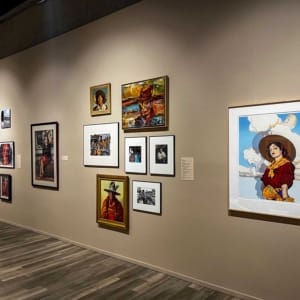
At the Tucson Museum of Art in the United States, Marianna Pegno, director of engagement and inclusion, and senior curator Christine Brindza present a community-based curatorial framework developed to challenge and expand traditional narratives of art in the American West. Their approach brought together artists, educators, immigrants, students, and community members in sustained conversations that shaped artwork selection, interpretation, and programming. In this model, expertise emerges not solely from academic training but through dialogue between institutional knowledge and lived experience.
Emma Harjadi Herman, manager of education and inclusion at the Stedelijk Museum Amsterdam, and researcher and adviser Anna Elffers examine the museum’s Blikopeners youth program. Centered on peer learning and paid participation, the program has evolved from an initiative aimed at attracting teenage visitors into a broader platform for talent development, cultural literacy, and long-term engagement with the arts.
Artists, too, intervene in the museum’s narrative—and they are present in this issue as well.
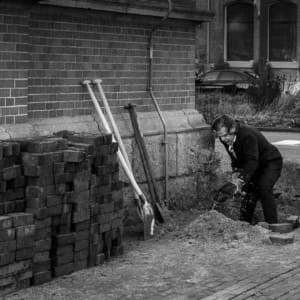
Renzo Martens calls for a reexamination of the historical foundations of the Stedelijk Museum Amsterdam, drawing attention to the plantation economies and labor histories that contributed to the formation of cultural institutions in Europe. His proposal involves bringing together descendants of plantation laborers and those whose labor constructed museum buildings, inviting them to participate in shaping the institution’s present and future.
Kaushal Sapre’s artistic intervention similarly challenges conventional notions of audience. Through an experimental, self-hosted internet radio station operating from an aging laptop in Delhi, Sapre explores alternative infrastructures for cultural production. The project does not assume a stable audience; instead, each broadcast generates its listeners anew. The audience is imagined, partial, and often invisible, emerging through shared listening experiences rather than predetermined categories.
In an interview conducted for this issue, artist, theorist, and educator Bill Balaskas argues that museums must address global challenges—such as climate change, artificial intelligence, geopolitical conflict, and economic precarity—not merely as exhibition topics but as conditions shaping institutional practice. Measures such as offering childcare, fair compensation, and mental health–aware facilitation, he suggests, are not peripheral considerations but infrastructures that enable true audience participation.
Jeanne van Heeswijk in her interview proposes beginning with open-ended questions and deep listening to map the “emotional tissue” of a community, allowing lived experiences and shared concerns to emerge. Her approach focuses on enabling communities to collectively shape their environments and imagine more just futures. She demonstrates that institutions can support this process by creating fair conditions, such as compensating participants and ensuring access. Through ongoing, flexible collaborations, her method fosters sustainable change by transforming institutions into more inclusive, participatory, and equitable spaces grounded in shared authorship and collective decision-making.
Across these contributions, a common theme emerges: Inclusion cannot remain rhetorical. To invite participation is also to reconsider authority, expertise, and institutional habits. Genuine engagement requires moving beyond consultation, to forms of collaboration that allow multiple perspectives to shape institutional practice. This does not imply abandoning professional expertise. Rather it involves recognizing that curatorial knowledge, scholarly research, and lived experience can coexist and inform one another. The figure of the “emancipated spectator” does not replace institutional authority but challenges it, introducing a plurality of perspectives and educational and curatorial practices within the museum. Participation, then, is not an additional program. It is an institutional commitment.
Such plurality is not without challenges. As museums become more visible within political debates, they also risk becoming sites of political instrumentalization—particularly in contexts marked by populism, authoritarian governance, or funding precarity. Yet the alternative—retreating into claims of neutrality or autonomy—is no longer viable.
The contributions in this issue do not propose a single model for the future museum. Instead they present a range of practices, reflections, and experiments that suggest possible directions. Together they point to institutions that are more permeable, self-reflexive, and open to dialogue. Audiences, from this perspective, are not simply targets of communication strategies or numbers to be expanded. They are participants in an ongoing process through which museums continually redefine their role.
Lora Sariaslan is an art historian, curator, and Assistant Professor of Modern and Contemporary Art at Utrecht University. Her research explores transcultural artistic practices, migration, mobility, cultural identity, and the politics of place and belonging. Sariaslan was previously curator at Istanbul Modern and an assistant curator at the Dallas Museum of Art, experiences that continue to inform her interest in the relationship between scholarship and curatorial practice. As an independent curator she has curated/ co-curated exhibitions internationally. Bringing together art history, curatorial practice, and critical theory, her work examines how artists, museums, and cultural institutions negotiate questions of displacement, representation, and contested histories across geographic and cultural boundaries. Her current research engages with museum collections, mapping, and critical approaches to art history and heritage.
Patrick van Rossem is an art historian and Associate Professor of Modern and Contemporary Art at Utrecht University. His research focuses on the relationship between art and its audiences, particularly in post-1960s art, exploring how audiences become active participants in the production, interpretation, and experience of art. His work examines the performative turn, the representation of audiences, and the changing relationships between artists, artworks, institutions, and publics.