Follow a manual added link
Stedelijk Studies Journal Issue #15
What working together can do
An Interview with Jeanne van Heeswijk by Patrick Van Rossem
Patrick Van Rossem (PVR): Jeanne, can you take us through your artistic practice? I’m especially curious about how you develop concepts: where does the initial seed of a work emerge, and how does it evolve into a fully developed concept that guides your process? I’m thinking here of the many concepts you develop and use: the point of entry; or for example the emotional tissue.
Jeanne van Heeswijk (JvH): I work on ways in which we can collectively be together, how we can give form to the situation in which we find ourselves, and how we can scaffold a more just future. In order to do this, I most often work with people and places in unstable collective formations that are built over longer periods of time. The imagination of that place, its conditions, its challenges is therefore an important point of departure: how can we create an image together of a place, a situation, a moment in time? These questions run like a thread through my entire oeuvre.
When I work in and with institutional contexts, such as a museum, the question that the institution asks is taken as a point of departure. When I worked with the Philadelphia Museum of Art for instance, the museum asked if it could build a different relationship with the city and its communities. The museum wanted to relate to the city in a more reciprocal way, and invited me to work out how. I actually found this question very broad and complex. For a neighborhood or a specific group that is possible; but for an entire city it is not self-evident. The scale of a neighborhood is where I understand the local, not as a postal code but as an emotional condition embodying global conflict with local specificity.
One of the working methods I use in my practice is that you can listen closely to the local; so, to speak, to listen to what is going on, to what people are experiencing. I call that the emotional tissue. I see houses and streets not only as physical infrastructure, but also as emotional infrastructure. To engage with this emotional tissue requires deep listening. This is very important to me: to listen to the emotional substrata, to what is going on amongst people, their ideas and how they feel about what is happening and if they have any agency in it, and how they see their futures in it. Only through doing this can I, with others, respond to the institution’s question of who they were trying to be in relationship with.
Philadelphia Assembled was an expansive collaborative project at the Philadelphia Museum of Art that explored radical community building, resistance, and social issues shaping Philadelphia’s changing urban landscape. Initiated by artist Jeanne van Heeswijk, the project brought together artists, activists, community members, museum staff, and other collaborators to share personal and collective stories and experiment with new ways of connecting communities. Held from September 9 to December 10, 2017, the project encouraged participants to consider how communities can work together to shape their futures. In spring 2017, Philadelphia Assembled manifested as a series of actions, conversations, meals, installations, and other events throughout the city, and subsequently became a communal presentation at the Museum’s Perelman Building.
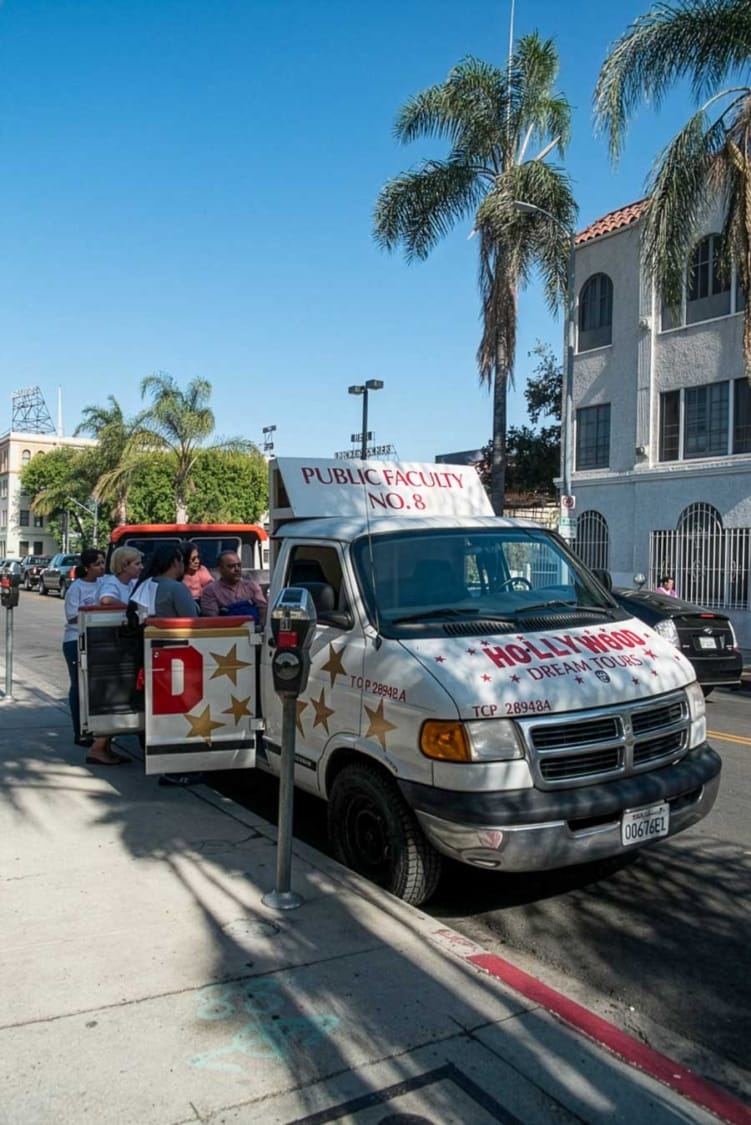
Figure 1. Public Faculty no. 8, LACE-Los Angeles, 2014.
PVR: And how do you go about this? How do you reach those communities and how do you get to know that emotional tissue?
JvH: I do that in many different ways. I often take a question as a starting point to start conversations with people. I ask that question, and from that conversation new questions emerge that I take to the next person. One person suggests another person or group, and in that way it continues. It is a kind of relay or a game of telephone. What I avoid is working through a predefined list of questions. So I use deep listening and I aim to open myself up to as many chance encounters as possible. Sometimes this emotional tissue is different from what the museum knows or wants to see. In Zurich, the Migros Museum für Gegenwartskunst had a list of people and communities they had worked with or could imagine working with.[1] Something as simple as talking to someone in a cafe, or at a protest, was a way to expand that map. People bring what they need to bring to the process.
Outside of institutional frames, I have been working for [2008 -ongoing] eighteen years on Public Faculty.[2] Here too, I develop a line of questioning and hold a conversation without assumptions. I stand on a street corner for four days, each time for four hours, and then I speak with anyone who wants to engage in conversation about a particular question. It never starts from an assignment or serves a particular outcome. It is to train myself in conducting Socratic conversations. It is a form of deep canvasing.
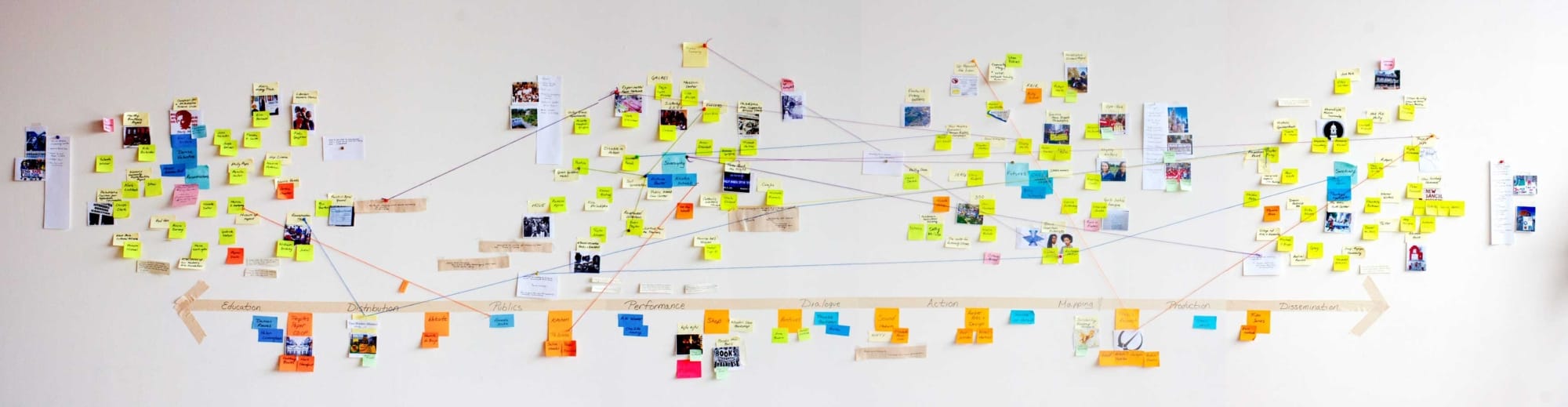
Figure 2. Philadelphia map of conversations and referrals, Philadelphia studio. Photo Ricky Yanas. 2015.
PVR: What you therefore seem to want to avoid above all, is engaging too exclusively with people and groups who already belong to the institution’s network—even its extended network—or who are already on the museum’s radar.
JvH: I do indeed avoid the museum network, their chosen and desired network, when I conduct my conversations. I look for a different point of entry to have those conversations. In Philadelphia, the museum had a whole list of organizations they wanted me to speak with—groups in the city they wanted to involve. Instead, what I did was speak with people I knew from other collaborations, whom I knew had a relationship with the city of Philadelphia. I asked them to introduce me to someone from Philadelphia—preferably not in the arts. Through this relay system, I ended up having 500 conversations in Philadelphia. These were conversations in which I listened to how people describe the situation they find themselves in. This gave the project an integrity and concreteness that only speaking with known institutional collaborators could not produce.
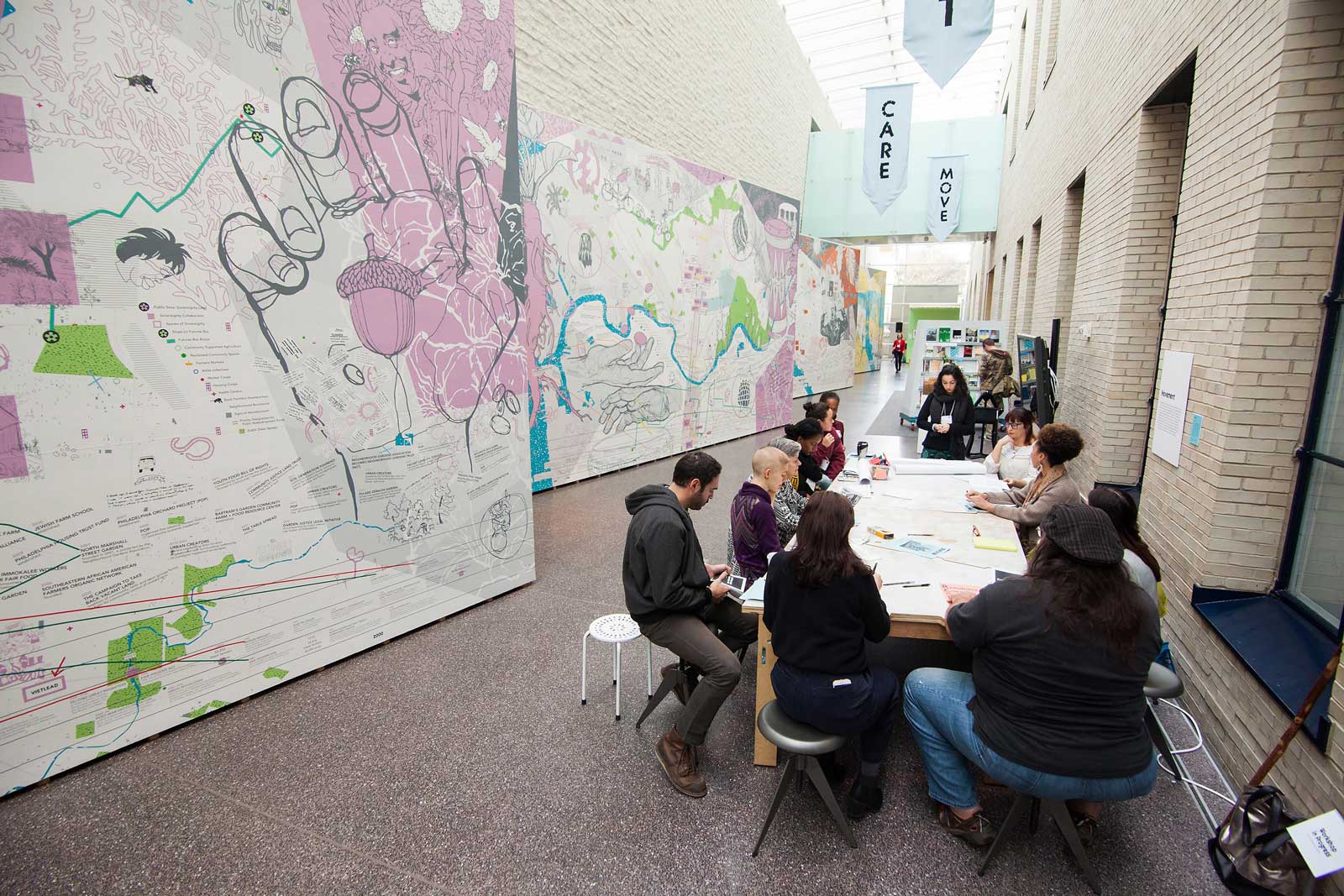
Figure 3A. Philadelphia Assembled. City Panorama. Philadelphia Museum of Art. Photo Joseph Hu. 2017.
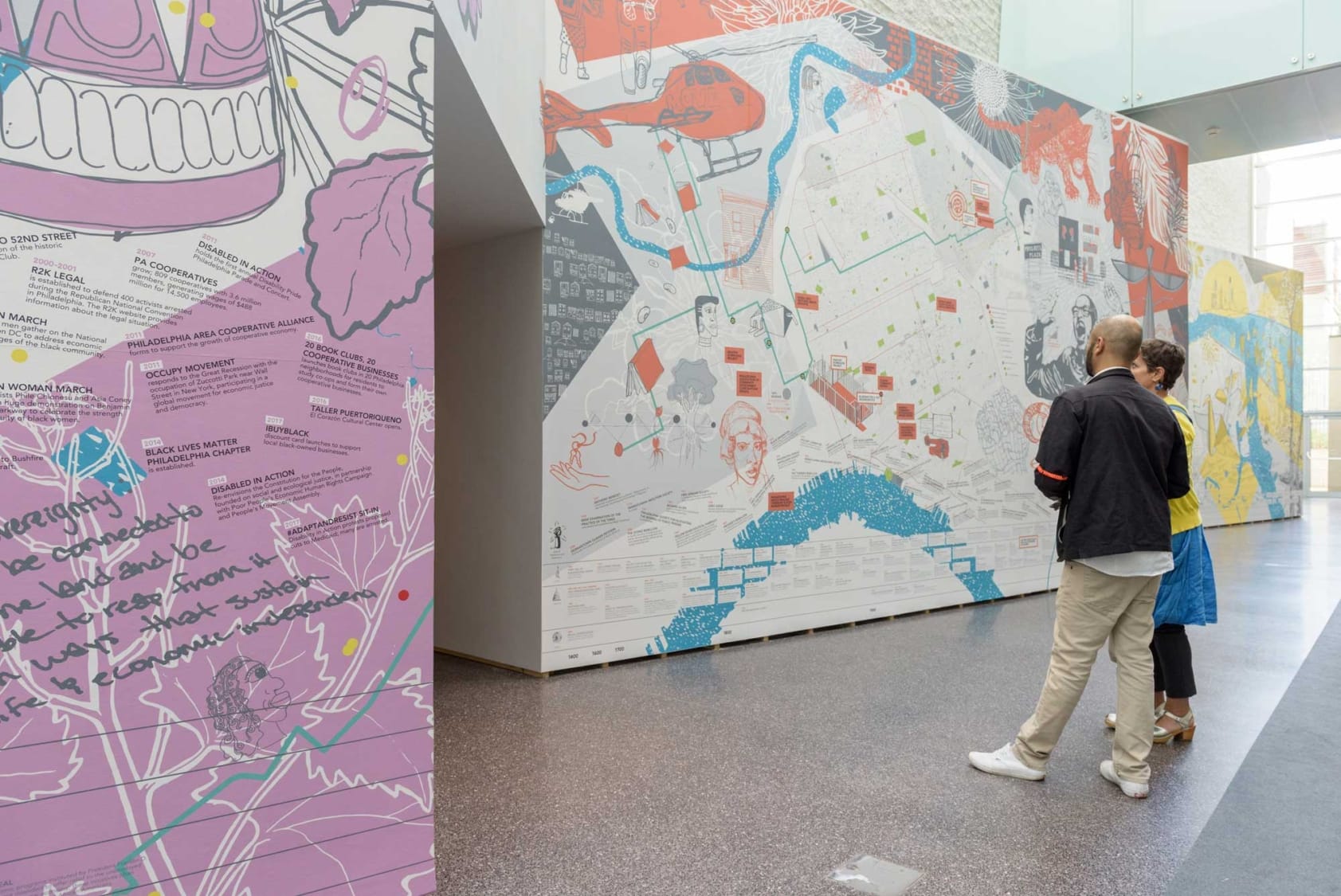
Figure 3B. Philadelphia Assembled. City Panorama. Philadelphia Museum of Art. Photo Joseph Hu. 2017.
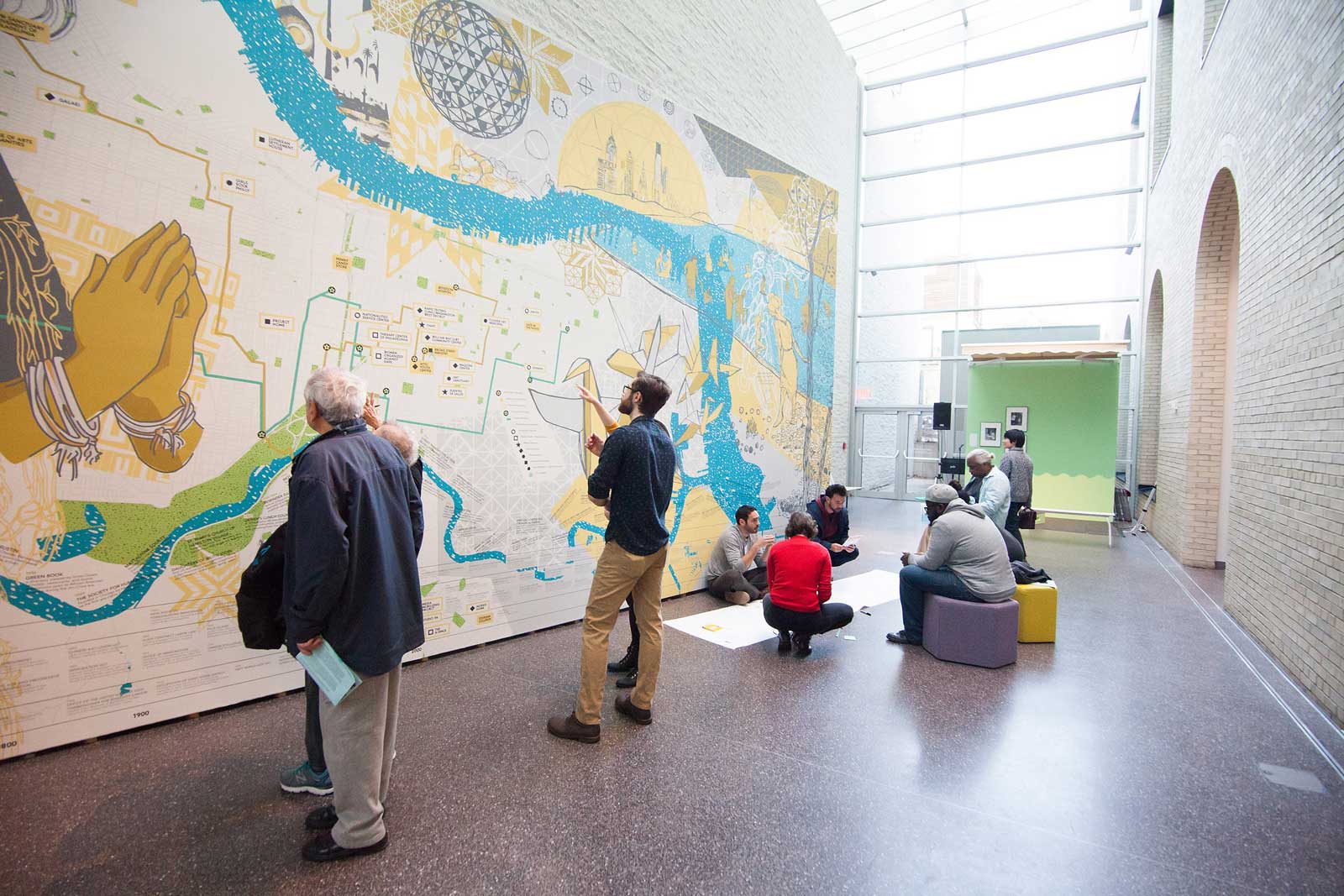
Figure 3C. Philadelphia Assembled. City Panorama. Philadelphia Museum of Art. Photo Chris Kendig. 2017.
PVR: What question did you use in the Philadelphia Assembled project? And how do you move from a question to a shared project?
JvH: My central question for these conversations in Philadelphia was: “What is the spirit of Philadelphia?” It was a very open question. I was reading The Spirit of Philadelphia: Social Justice vs. the Total Market, a political science book by Alain Supiot. My question was simply: what is that spirit of change? Where are alternatives being built? Where does the city experience friction? To be able to really listen it cannot be a question that leads to a yes-or-no answer, but rather one that opens up a conversation. Gradually, you begin to gather a set of questions —questions you hear people repeat or reformulate.
From these conversations, you hear whether people feel they have agency—whether they feel things can change, whether they believe they can participate, whether they feel connected, where their bonds lie. You hear all of that in the way people speak. And from all these conversations, themes begin to surface that circumscribe the working area of for the project, a field of interaction. A team is then formed, consisting of co-creators whose engagement emerges from this process. In Philadelphia, there were 150 people, divided into different working groups, each focused on a theme or atmosphere: Sanctuary, Sovereignty, Movement (about knowledge-sharing, collective action…), Reconstructions (the US history of the Reconstruction Era and Civil Rights Movement, and this history’s relationship to present-day Philadelphia), and Futures (reimagining future possibilities through communities).
In Philadelphia, the conversation often revolved around sovereignty: for example food sovereignty, economic sovereignty, body sovereignty, and police brutality. You could call these themes, but we ultimately called them Atmospheres of Democracy. These included questions such as: who has the right to the city? About reconstruction, urban futures, and how to build movements. What about sanctuary—sanctuary cities, safer spaces? And for whom are these spaces? Do they always provide safety? Who guarantees that? Around these questions working groups of twenty-five people were formed, who met biweekly to unpack their atmosphere.
In the Sanctuary Working Group in Philadelphia, there were people working on providing forms of sanctuary—people from the New Sanctuary Movement, a needle exchange program, initiatives for homeless youth of color, homeless shelters… In the end, they simply could not jointly write a shared code of conduct because there were too many internal differences – sometimes radical differences – in their lived experiences and approaches to their work. My aim is not to create a simplified, happy outcome in which those I bring together become ‘one.’ Rather, I want to create the conditions that allow them the possibility to find ways of working together in spite of these differences. In the end, this group, after many discussions of methodology and sanctuary, renamed themselves Towards Sanctuary and developed a stewardship curriculum on how to steward braver spaces, safer spaces for the city, deeply rooted in understanding that safety could never mean safety for everyone at all times. They then practiced this in the Towards Sanctuary Dome over ten days in the city: a radical welcome for all; a space across difference.
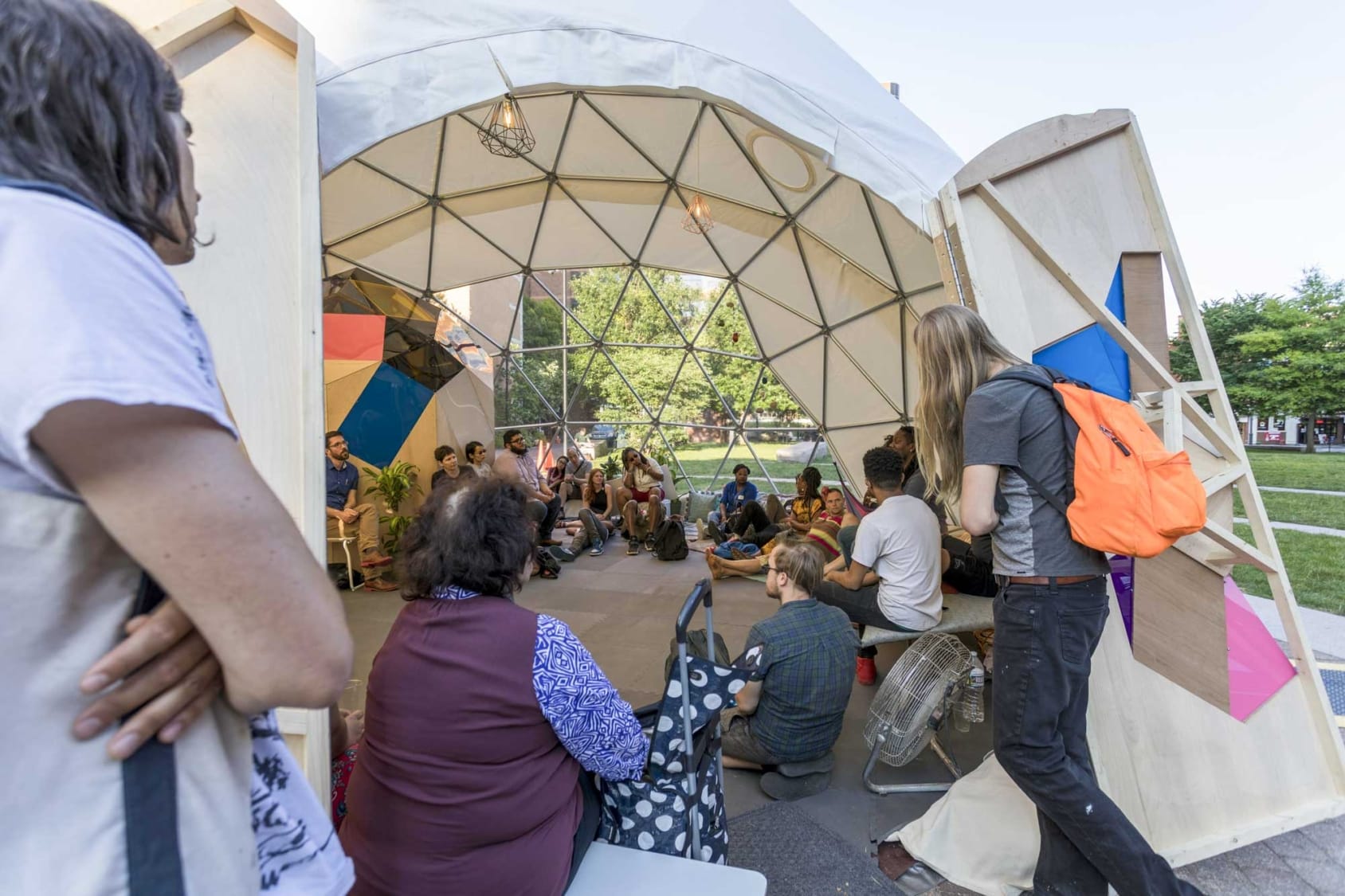
Figure 4. Philadelphia Assembled. Sanctuary stewards gathering. Philadelphia Museum of Art. Photo Joseph Hu. 2017.
PVR: At what point does the museum as an institution begin to play a role? And what role does it take on?
JvH: Each project is of course different. The art center, The Oude Kerk in Amsterdam, located at the Wallen [Red light District], invited me to work with them and their relationship to the neighborhood, to engage more with its surroundings. Of course, if this is your desired outcome, you have to reshape and redefine your relationship to that environment. Many conversations were held in a small former chapel with an entrance directly onto the street. This ‘studio’ became a place of refuge to speak to how people were dealing with their life circumstances, particularly in the midst of the COVID pandemic. Shopkeepers, sex workers, neighbors, passerby’s, all talked about solidarity in a time of crisis. For this project, I asked questions that focused on how, in a time of continuous crisis, we can make uncertainties common. The project was therefore called It’s OK. Commoning Uncertainties. “Commoning” is about making something shared. In more typical usage this idea concerns resources such as energy, or housing, but here the focus was on the feeling of uncertainty. How can we share that feeling—how we relate to each other, how we deal with stress, stress about the world, the future of a place—make it collective? How do we think about sharing the time and place we are in now? How do we do that? How do we share responsibility and agency? And how can we collectively give form to this in a different way?
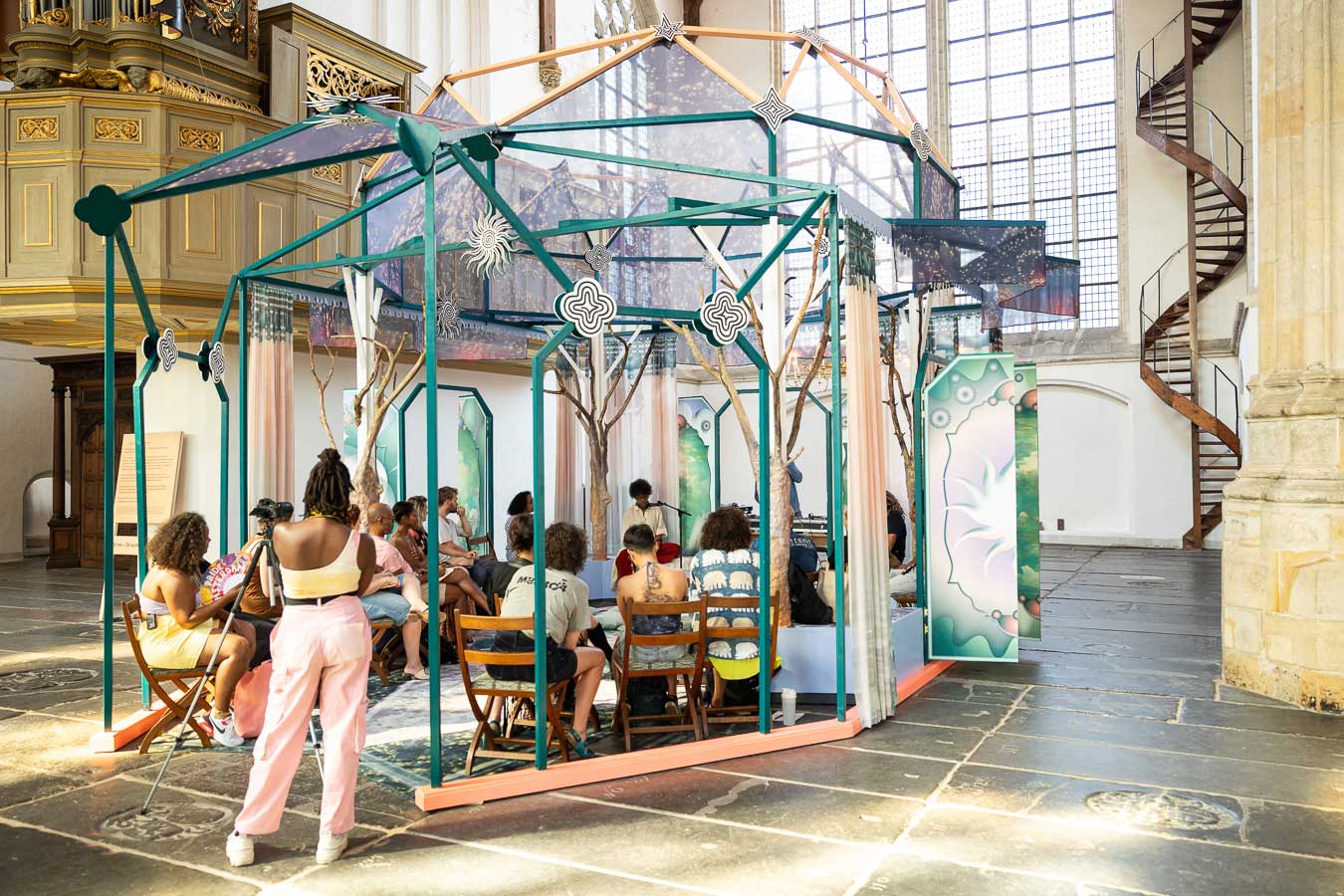
Figure 5A. It’s OK… Circle 7: State of The Arts #1. Oude Kerk, Amsterdam. Photo Maarten Nauw. 2023. Chapel space in collaboration with Viola Renate and Satja Jurc Blagovič.
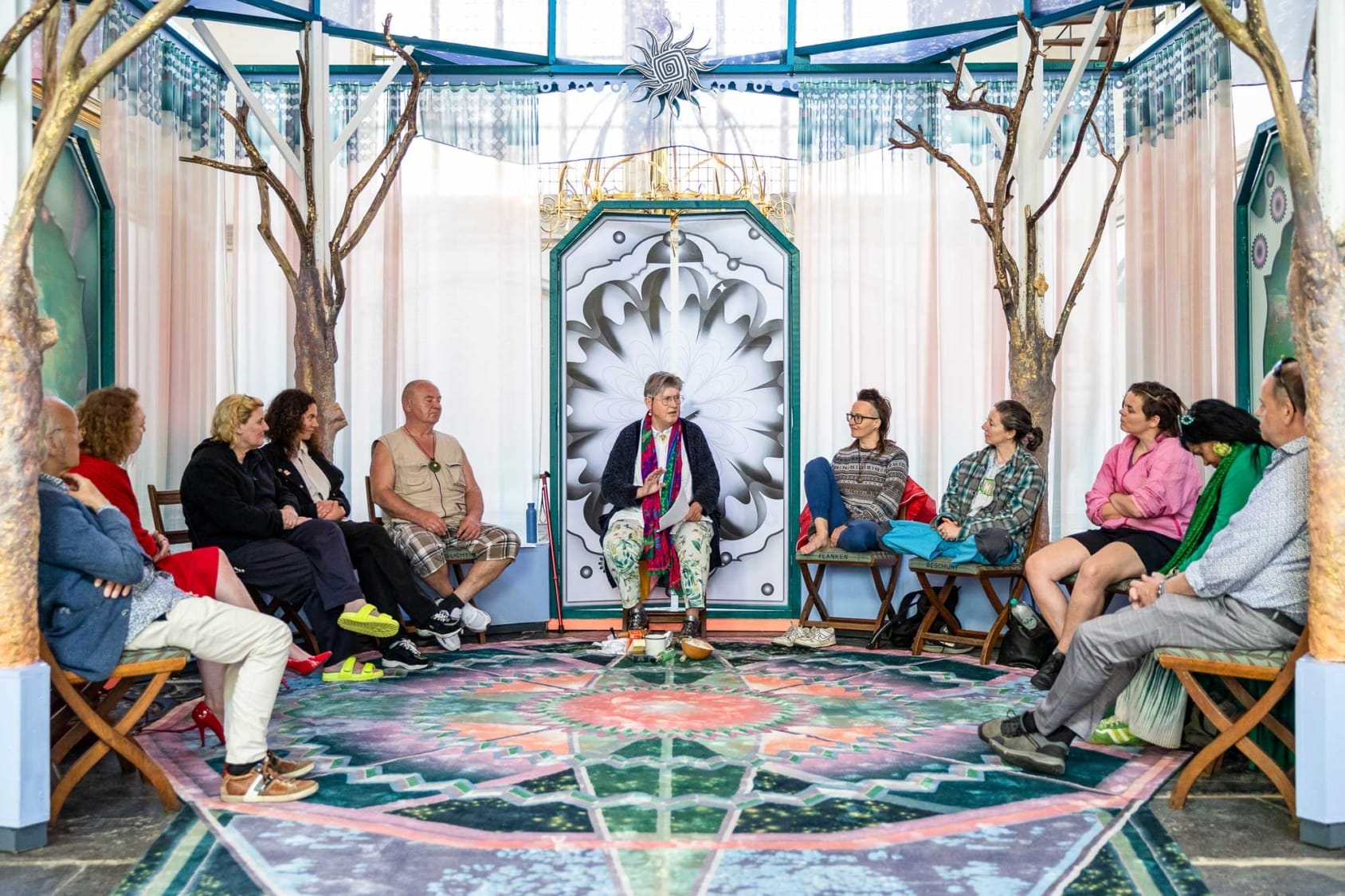
Foto 5B. It’s OK… commoning uncertainties Circle #1 – Doubt. Photo Maarten Nauw. 2023.
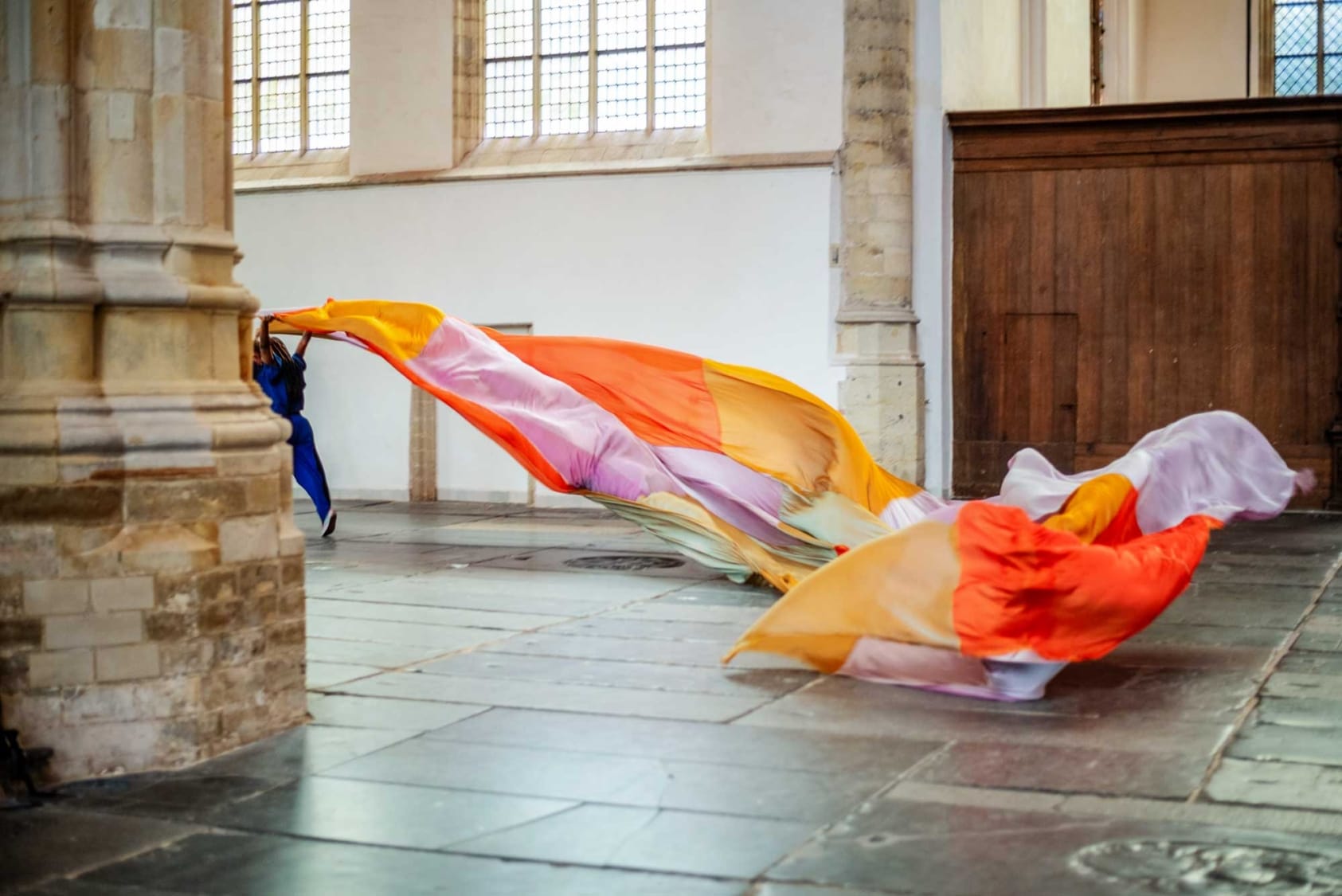
Foto 5C. It’s OK… commoning uncertainties Circle #6 Calibrating Intimacy. By Joy Mariama Smith. With Eroca Nicols, Philipp Hege, Mijke van der Drift & Jay Bernard, Justin F. Kennedy, Dylan Spencer-Davidson, Ciro Goudsmit, Laura Fernandez Antolin, Alyssa Reiziger. 2023.
It’s OK… commoning uncertainties was a public manifestation at the Oude Kerk in Amsterdam, initiated by artist Jeanne van Heeswijk and held from May 26 to September 24, 2023. Bringing together more than one hundred local residents, artists, makers, thinkers, and activists, the project organized weekly public gatherings to discuss current social issues and explore how collective action can strengthen the social fabric of the city. Taking place in the contested context of Amsterdam’s Red Light District, It’s OK… created a space for different perspectives, needs, and experiences to meet, with community-building and shared uncertainty at its core.
JvH: In Philadelphia the museum was of course already somewhat engaged with certain civic groups. Though the process of creating and cultivating the working groups, which induced the museum’s staff, the museum changed. It became a co-creator with the various individuals and groups recruited to the project, completely re-organizing typical power dynamics for the duration of the entire project. In this way, I brought the groups together with a feeling of collective ownership, an idea central to all my projects. There are many ways to develop this feeling, but in Philadelphia, we accomplished this by creating what has now become a standard practice throughout my work: everyone working on the project is paid. This includes any museum staff who contributes time outside their regular working hours and anyone who participates in the working groups, or other modes of engagement. In Philadelphia in 2015, we looked at the living wage and arrived at $17 per hour for everyone involved, including me.
Paying people is a form of equity via participation. It also creates transparency about power. Often, in institutional projects, that transparency is absent, and participants are expected to volunteer. The structure is usually such that these volunteers participate in something designed by others—a pre-existing framework. So if you want to question that framework, you have to build in all sorts of mechanisms that prevent you from automatically reproducing it. But that creates friction with how museums operate. A response from the Philadelphia museum, for example, was: “We’re not going to pay the entire city!” It was almost seen as a defeat—that you have to pay people to participate. A museum is used to visitors paying to take part in the museum experience, not the other way around.
PVR: Can we go a bit deeper into that idea of collective leadership? How do you approach that in practice?
JvH: Jonas Staal always says: it’s not about being leaderless, but about leaderful. It’s not that there is no hierarchy, but rather that there is a different form of leadership: many people steering together. They are all co-creators of the structure, the content, and the direction. They are also co-authors of the questions we choose to address. This requires a lot of unlearning and relearning how we work together. We’re really noticing this in action at the moment with BAK Basecamp for Tactical Imaginaries in Utrecht, for instance. The Basecamp is the first institution I’ve ‘led’ instead of responding to, which shifts the frame: our collective leadership is not in response to an institution but poses the question: can collectively organizing a space change what a cultural and art organization can do? This means we’re devoting ourselves to a space of constant becoming and flux. The premise central to this organizing principle is that we consider every form of participation as equally necessary and important.
Through various formats you can safeguard that equity. This can be done using methods borrowed from social justice organizing, such as rotating leadership, active listening, and actively looking at who does and does not have a voice and what is unspoken. In Philadelphia, we worked with social justice facilitators for the working group sessions. I learned a lot from them and their methodologies. Since then, I often work with a “temperature keeper” in the room. If things become too intense, if trauma is triggered, they can indicate that it’s time to press pause.
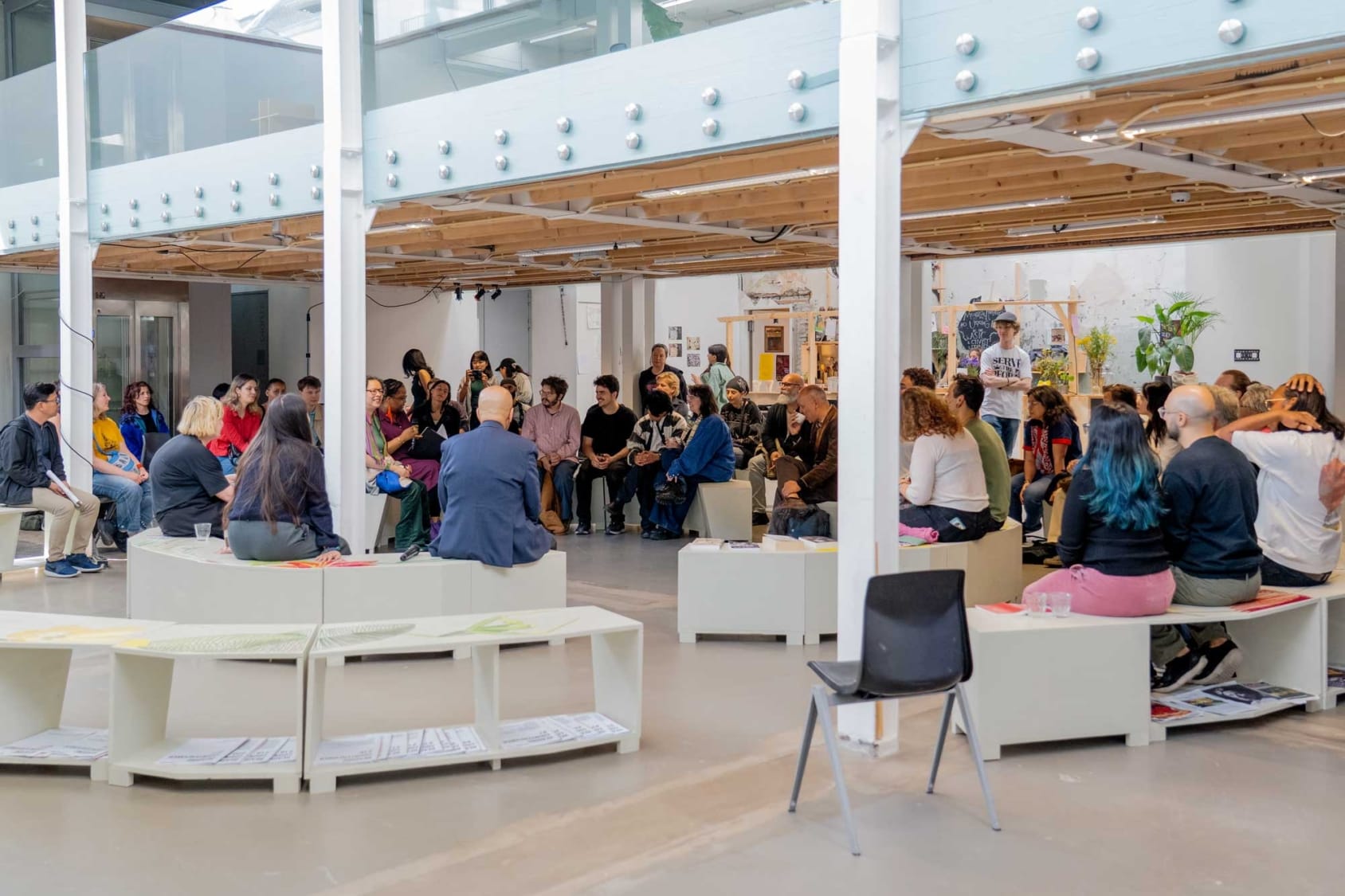
Figure 6. 1933 Revisited. Antifascist Assembly. BAK Basecamp. Utrecht. Photo Wang Xue Sophia. 2026. In, What are your flowers, an assembly sculpture by Iliada Charalambous.
BAK Basecamp for Tactical Imaginaries is a collective cultural infrastructure in Utrecht, The Netherlands, for gatherings, workshops, discussions, meals, and presentations, continuously unbuilding and rebuilding itself in response to the urgencies of the present. Jeanne van Heeswijk has taken the artistic lead at BAK since July 2024, and became the domain coordinator for core building since the Basecamp’s inception in 2025. The Basecamp brings together people experimenting with new forms of democratic cultural practice, creating spaces for participation, exchange, critique, and collective action, and exploring how culture and art can contribute to alternative social and political imaginaries.
PVR: Today you are very active at BAK Basecamp in Utrecht. It’s a different kind of organization than a museum. I imagine collectivity is more inherent there?
JvH: What we are trying to do with BAK Basecamp is quite literally to collectivize a contemporary art and culture institution. We are trying to ensure that it is no longer run from a single person or vision, but is carried collectively by a group of people. So this is about making the institution as a whole collective. How can you do that with different groups of people? With different forms of involvement, different avenues of connection? It is in experiment in building a truly public institution.
I have a long history with BAK: as a Fellow, an Artist Associate (a co-thinker) and I created Trainings for the Not-Yet, an exhibition as a series of trainings based on learnings from past projects. BAK itself also had many groups and individuals connected to the institution, and today we are of course expanding that. Again, we are organized in working groups with a biweekly assembly where we discuss the future of the institution, where we want to go, community agreements, codes of conduct… This really needs to be rigorously maintained—just like in Philadelphia. There, over the course of a year and a half, we held biweekly meetings with 150 people divided into five working groups.
PVR: How does your concept of wiggling the frame fit into all of this? The institutions you work with or that invite you have their own methods, rules, assumptions, procedures… you inevitably have to relate to them.
JvH: With wiggling the frame of the institution, I mean looking at where movement is possible, where the assumptions lie, where the tensions are, where the ingrained frameworks sit. It is a set of relationships that you can make people aware of. It’s a different way of looking at how you organize yourself—for example by reflecting on the assumptions embedded in the organizational form you choose. These are all power relations, relational structures, and when you start to tug at them, all kinds of possibilities begin to emerge.
At a certain point, I step into that frame, that field of interaction, and become one of the co-players, sharing my authorship. That has far-reaching consequences, also for me. I am no longer the one who determines or directs. It becomes a negotiation of which you are yourself a part. If everyone wants something to be pink, for example, and I don’t, I can argue my position—but if the group truly wants to go in that direction, then that’s what happens.
But that is almost contradictory to our current institutional culture and how institutions are organized—often around a single vision, rather than around the idea of collectivity. At BAK Basecamp, we have been practicing a sociocratic structure for a year and a half, using it as a way to make decisions. And it is not easy: you have different levels of knowledge about topics, different points of entry, expectations, forms of attachment. Making decisions collectively means you may end up feeling disappointed. The aim, of course, is to develop a solid decision-making model in which a common ground can be found that everyone can stand on.
But BAK, as mentioned, involves a different set of challenges than Philadelphia. At BAK, it concerns the institution as a whole. In Philadelphia, it was about a project that tested the museum’s framework. The communications and press department, for example, found it particularly difficult to write a press release about the project. Co-creation and working with different groups and communities also means that my own signature becomes less visible—which is precisely the intention—but translating that into museum communication seems to be difficult.
A project centered on collectivity and co-creation rubs against the formats and frameworks in which institutions operate, and against the traditional functioning of a museum. In Philadelphia Assembled, the co-creators shaped both the exhibition and the project together. We even wrote the wall texts collectively, and that is challenging for museums. A non-neutral wall text—a text that expresses a point of view—is often a no-go.
PVR: And how do those exhibitions, workshops, and projects—when they take place in the museum—relate to the existing flow of visitors?
JvH: In Philadelphia, there was an exhibition with a public program. The co-creators also gave tours themselves, and during opening hours there were all kinds of workshops that visitors could take part in. That was quite stressful for the museum: so many activities, so many people involved. There were workshops and tours by participants, storytelling sessions, open mics and conferences… The pace was brisk, and this kind of participatory approach is very difficult for institutions to sustain. People come, join in, and it doesn’t stop. It becomes a kind of living organism that really tests the elasticity of an institution.
Even for a smaller institution like BAK, and also for an institution such as the Oude Kerk in Amsterdam. At the latter, events took place during opening hours, very consciously, as part of a search for connection. This led to very interesting cross-connections, but it was also complex. It is a place that attracts many tourists—so how do you deal with this openness when working intimately within groups? People who were just visiting would often sit down, and be invited to join. There was positive feedback from visitors, who said they had heard a powerful story about life in the Red Light District, and about the role of the Oude Kerk as an art institution in an area under pressure. Sometimes people simply joined to listen to conversations but often they started to participate.
PVR: Creating an image of a situation comes back repeatedly in your discourse. Is it also connected to linking different images and collectively working toward new visions of the future.
JvH: That image is crucial, because I really think from within the visual arts. It is about giving form to a situation. That is connected to survival. If you are no longer able to form an image of where you are and where you live, that becomes a problem. We are constantly bombarded with images of success—of how the future should look. So how can you get a grip on the your reality? How do you want to participate in it, and how do you want to exert your agency? For me, that is essential, and I think it has to do with building imaginaries. It is about how, through imagination, you gain agency over your future.
The next step is how you connect that sense of ownership and agency with others. That is not easy. There is also an increased intensity of perception, partly due to all the channels through which images reach us. Images are often quite fixed and hierarchical. So how can you exist within such complexity? That also relates to what I call Training for the not yet, which I describe as practicing for what does not yet exist, but for what you would like to come into being. That future image—for a more just future—requires training; it is a practice. How can we practice for something we do not yet know, but that we feel we need? And how do we do that? Perhaps that is my entire methodology: how can we, together, try to give shape to something that can hold more of us than what exists now, even though we do not yet know its final form? How do we do that?
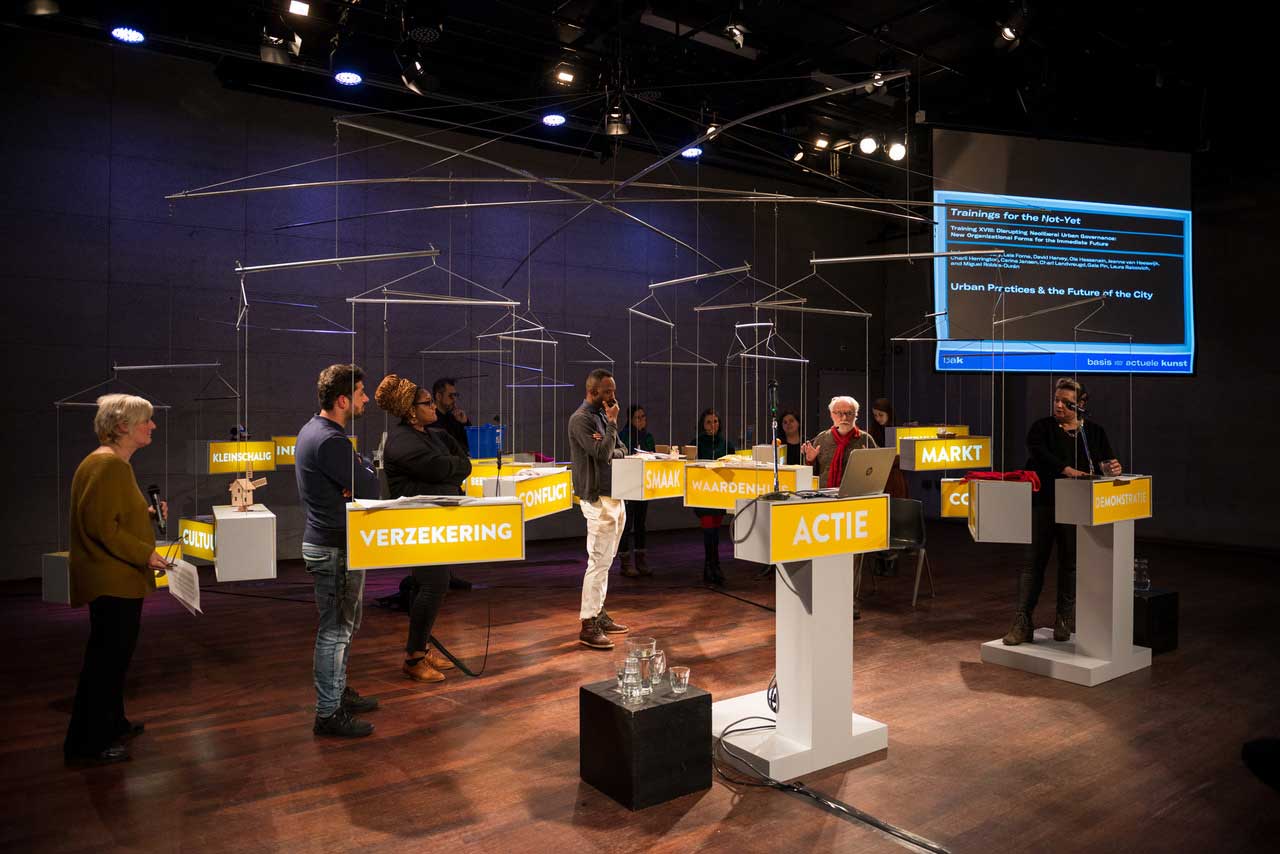
Figure 7. Trainings for the Not-Yet. Urban Front, Disrupting Neoliberal urban Governance, in Act of Balance. Afrikaanderwijk Coöperatie, BAK, basis voor actuele kunst, Utrecht. Photo Tom Janssen. 2019.
PVR: You also use the concepts radicalizing the local and rerooting. What do they mean to you, and how do they relate to each other?
JvH: How can you create different kinds of connections—a sense of belonging—if you are not willing to question your own assumptions? For me as an artist, it is important to create projects in which people, within a safer space or a brave space, can move closer to one another by working and building together. A place where people dare to let go of their own assumptions. But at the same time examine the conditions of who can and cannot afford to do this. We are not good at committing to people who are not close to us, other than our nearest and dearest.
How, in times of uncertainty, can we connect with one another in order to act? For me, that is what I call rerooting. It is part of what I call radicalizing the local. As I said, the local is not a postcode, but an emotional tissue. The question then becomes: how do you make things within that tissue become evident, and how do you reconnect them into a new network? That is rerooting. For me, these are two facets of the radical: to reroot and to make emergent.
If you can make things emergent within an emotional tissue and connect them, you can create new forms of collectivity. In doing so, you also weave a network for survival. In these projects, everything is constantly in motion—it’s a series of ongoing feedback loops. The process itself is not the artwork. There are moments in the process when things crystallize, when something emerges in a concrete form — and that can be the artwork. It could be an image, a conference, a film, a conversation, an exhibition It becomes a platform where something is temporarily felt, seen, made tangible—where it takes shape. And from there, it can be set in motion again. Those moments of crystallization can be observed, evaluated—you can form an opinion about them. I call them learning objects rather than artworks.
PVR: There is, of course, also an end to projects. That differs from project to project. How does that process unfold? Are they sometimes continued by co-creators?
JvH: A project like the Afrikaanderwijk Cooperative here in Rotterdam, which started in 2013, is still ongoing. The same goes for the project 2Up 2Down / Homebaked, a project for the Liverpool Biennial, which focused on communities in Anfield and Breckfield that has been running for twelve years. I no longer call these “projects”—they are living entities that have a life well beyond my interventions. While I still visit both regularly, I have also removed myself from the equation and participate only occasionally, as long as I still feel a sense of belonging or that my presence is desired. My own position as a co-creator can shift.[3]
If an institution or a project evolves—through collective decision-making—in a direction I feel less connected to, I may at some point step away. In most long-term entities, I often remain involved to varying degrees. It depends on the project structure and what it grows into. Homebaked grew into a Community Land Trust named 2Up 2Down; Freehouse: Radicalizing the Local, became the Afrikaanderwijk Cooperative, what we call a cooperative on the scale of a neighbourhood; Community Wellbeing Collective is now a collectively run space, infrastructure, and social program in Edinburgh. The project in Philadelphia, on the other hand, was structured differently, as a long-term, yet temporary assembly, collectively inhabiting an exhibition in which different groups of people tried to tell the story of a city together. A participant in the Philadelphia Assembled project, Gen Rollins, wrote her observation about the museum and the project, saying: “the walls did not crumble.” But also: “this wall carried stories which cannot be unseen.”
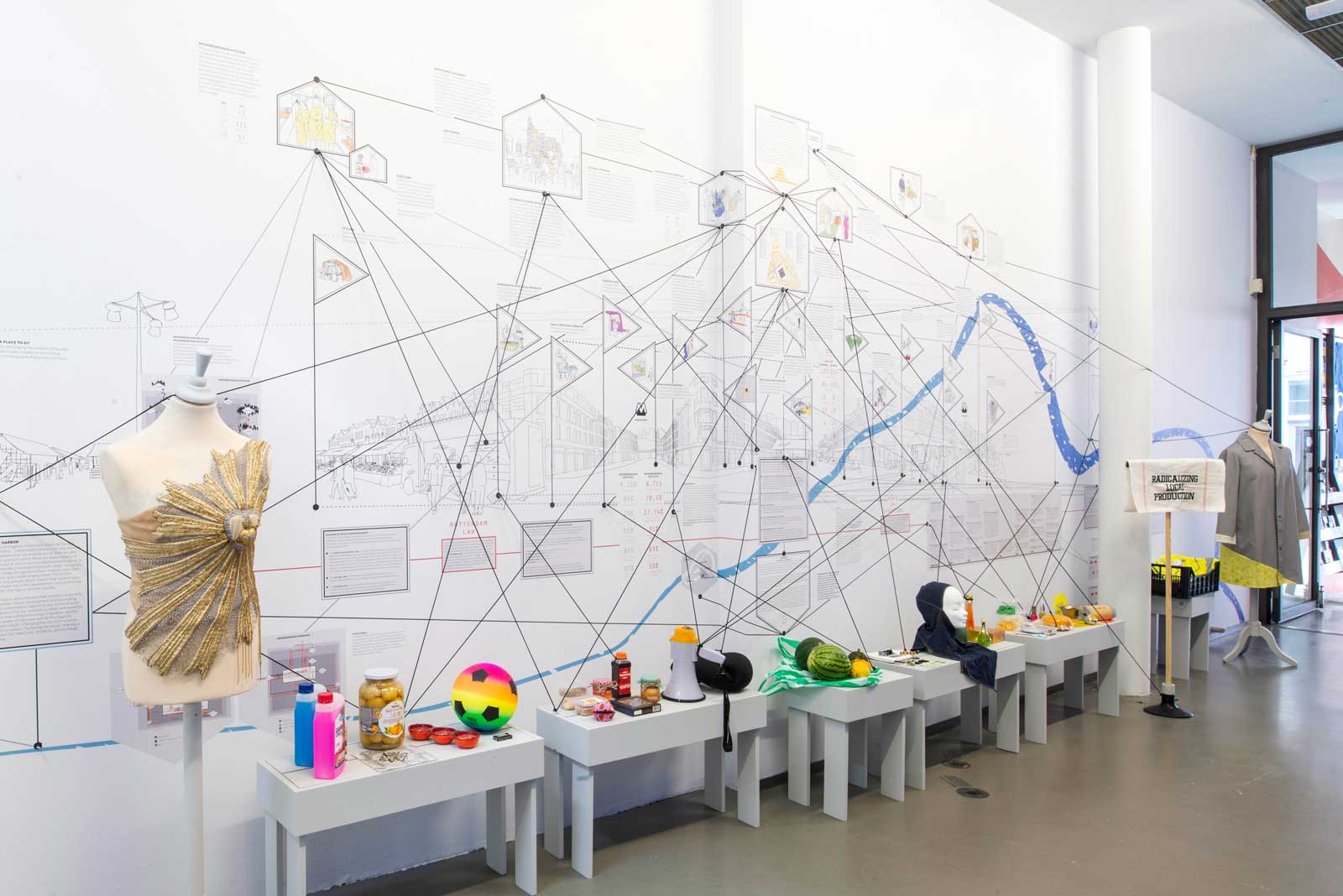
Figure 8. Trainings for the Not-Yet. Freehouse: Radicalizing the local. Photo Tom Janssen. 2019.
PVR: Do many connections between co-creators in Philadelphia remain?
JvH: Yes. But it wasn’t up to me to continue to hold them. Even so, the museum still benefits from that project. Connections were formed between groups, between co-creators and the museum, that did not exist before. And also independently of the museum—between people within the groups themselves. That makes sense: people built together intensively, sometimes seeing one another for the first time.
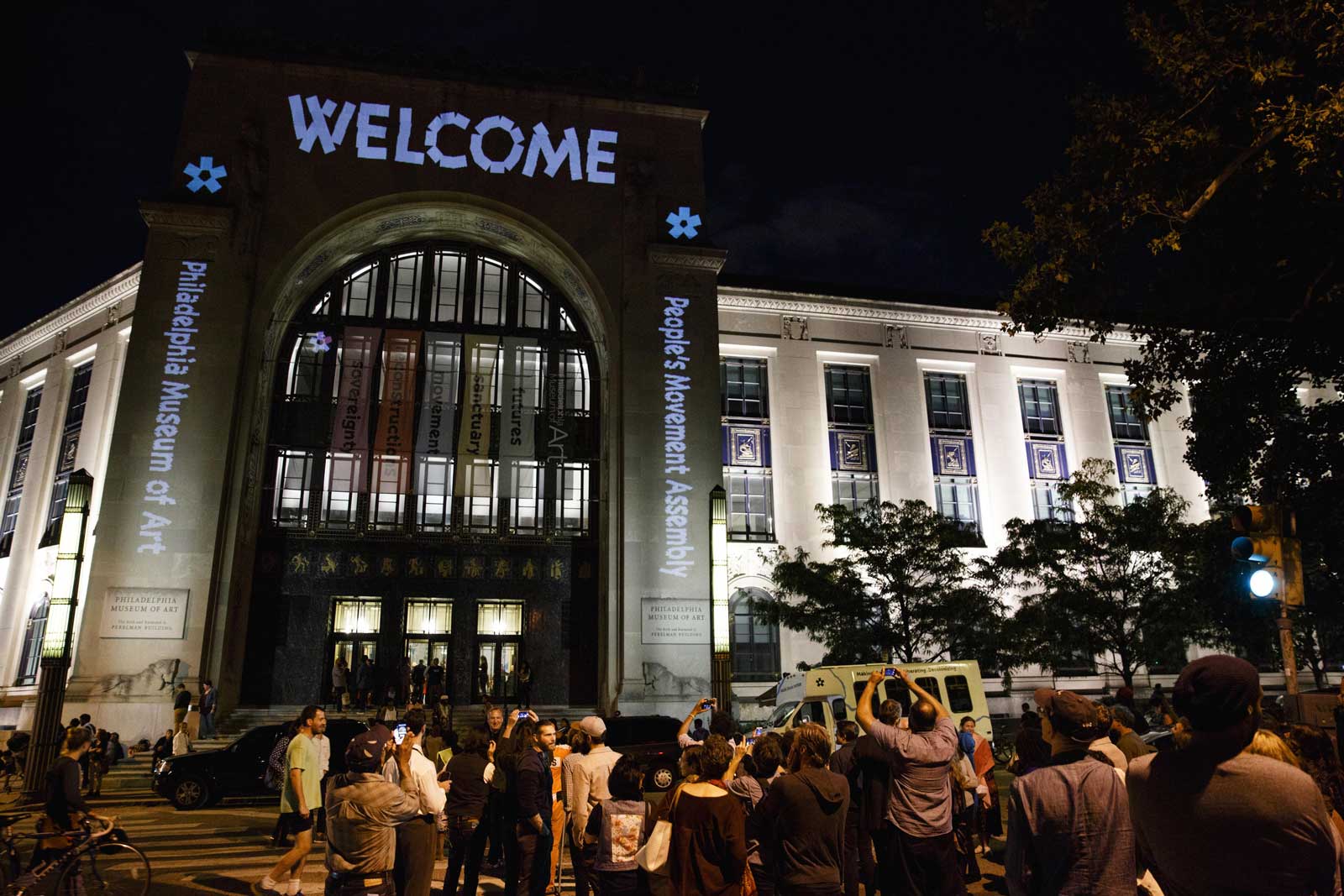
Figure 9. Philadelphia Assembled opening projection, PMA → PMA (Philadelphia Museum of Art → Peoples Movements Assembly). Photo LoveMeDoPhotography. 2017.
PVR: What challenges do you encounter when working with institutions like museums or similar organizations? When you’re invited to do something with audiences or communities?
JvH: Often, they don’t fully realize who or what they are inviting. They say: we want Jeanne van Heeswijk because she does “community” work.. But they don’t always anticipate that this also means unsettling the institution’s foundations—connecting it to a completely different network. And then suddenly all those groups and peoples are there—and they really are present. They take ownership, and that requires the institution to let go. That is something that can be learned, but you have to dare to allow it.
It should also not be seen as a one-off gesture—something good for the institution’s image, for the board, for politics, and for funders. The goal should be to connect people to each other around that institutional site in the long term. It is about reshaping a place and organizing a different kind of commitment around it. That may sound idealistic, but I am convinced it is necessary, and even possible.
There is another powerful quote by Gen Rollins, about the Philadelphia Assembled project. She names the problems, but also says: “we know each other now.” That kind of feedback is incredibly valuable to me. You see that an imprint has been made—and that people continue from there. Making things collective, despite all the difficulties, shows that things can be done differently. Maybe it didn’t fully succeed, or only partially, or didn’t continue—but it became part of our collective memory. It is now embodied knowledge.
Gen Rollins wrote:
“. . .This venturous exhibition has made me question how and where I sit in the city’s warmth. At a time when Philadelphia is on fire, PHLA has been both shelter and windstorm. The unending fear of institutionalized ‘isms’ forever looms like a ghost, but with the strength of every effort put into this project, it is impossible to let that fear consume. People know each other now. There is a recognition of ancestry and how our histories have led us to this sanctuary city and left out many others. Many of us are not fearful at all, but assured in our right to be reimbursed what was taken and returned our voices for what was never lost.”
“This project has left me to ponder if this is what happens when we have land to grow on. Do we make things beautiful because we believe in the power of collective effort? No doubt there have been hitches and bumps, conflict that resonates, and feelings of more to be desired. There is still room for more. My hope is that the Perelman has been nurtured beyond the point of no return. That the richness and value of all these laboring, loving, at times even agonizing hands, has made an impact celebrated through continued support. The building does not fall now, it is revived with rejuvenating hard work, and harkened back to the Museum’s first bricks, designed by architects, Julian Abele and Horace Trumbauer.”
“Our collective memory has documented the experience. Now, we keep moving.”[4]
Jeanne van Heeswijk is a Dutch artist who facilitates the creation of dynamic and diversified public spaces in order to “radicalize the local.” Her long-scale, community-embedded projects question art’s autonomy by combining performative actions, discussions, and other forms of organizing and pedagogy to assist communities in taking control of their own futures. Her practice engages with questions of amongst others social justice, collective agency, and the politics of place, fostering new forms of collaboration, participation, and collective imagination.
Patrick van Rossem is an art historian and Associate Professor of Modern and Contemporary Art at Utrecht University. His research focuses on the relationship between art and its audiences, particularly in post-1960s art, exploring how audiences become active participants in the production, interpretation, and experience of art. His work examines the performative turn, the representation of audiences, and the changing relationships between artists, artworks, institutions, and publics.
[1] Jeanne van Heeswijk is talking here about the project Stretching thresholds, holding streams, a socially engaged art project initiated by her and developed with Sophie Mak-Schram and collaborators at the Migros Museum für Gegenwartskunst in Zurich, in 2024.
[2] Public Faculty No 8, took place in Los Angeles on and around Hollywood Boulevard, where many segments of the public are to be found. The project used a tourist bus to engage in informal conversations with passers-by on the desires and expectations for the future of the neighborhood. It mapped out a dialog in text and drawings about those who are affected by the redevelopment of Hollywood, exploring the idea of publicness and its relation to active citizenship in our global cities. Events were conceived in collaboration with local artists and art collectives and developed in collaboration with community organizing groups including LA Voice, Yucca Corridor Coalition, Restaurant Opportunities Center of Los Angeles, and My Friend’s Place.
[3] The Afrikaanderwijk Cooperative, initiated by Jeanne van Heeswijk through the Freehouse Foundation, has worked since 2013 to strengthen the social, cultural, and economic independence of Rotterdam South by connecting local residents, entrepreneurs, and artists. 2Up 2Down / Homebaked is an ongoing community-led project initiated by Jeanne van Heeswijk in Anfield and Breckfield, Liverpool, reimagining the neighbourhood through affordable housing, shared spaces, and a community bakery. Working with local residents, architects, and designers, the project supports collective ownership and community resilience.