Follow a manual added link
Stedelijk Studies Journal Issue #15
Museum Accessibility as a Key for Institutional Change
by Sofia Bilotta
Placing audiences at the heart of a museum’s institutional mission demands bold, radical decisions and a genuine willingness to change.[2] While museums must continue their fundamental roles of preserving, documenting, researching, communicating, and exhibiting both tangible and intangible heritage, they must also revise these functions and introduce new ones that prioritize public engagement and participation. Audiences can no longer be seen merely as passive recipients of narratives and services curated by a small group of experts.
Many museum professionals now recognize that curatorial and exhibition design should not happen behind closed doors, crafted by small, homogeneous teams (typically uniform in age, gender, ethnicity, culture, education, ability, and socioeconomic background).[3] Yet challenging this long-standing practice is difficult and often met with resistance. Embracing participatory approaches in museums, by acknowledging the audiences’ right and ability to contribute to cultural heritage representation and artistic narratives, is not merely an organic evolution of museum practices. It is an ideological stance championed by a minority of professionals who recognize how the positionality of the museum staff affects institutional culture, and vice versa, and openly critique the exclusionary and elitist nature of the field.[4]
This issue is particularly pronounced in contemporary art museums, both in terms of the professionals who run them and the visitors they attract, who, more than in other types of museums, tend to be highly educated, financially secure, and socially privileged.[5] Despite contemporary art’s deep engagement with social complexities, contradictions, and conflicts, these themes rarely permeate the protected walls of the museum in forms other than art. Aside from artists’ own participatory projects, the few exceptions usually emerge through the work of museum educators and in outreach projects.
At MAXXI we have sought to challenge this tradition through various projects over the years, working on multiple levels. We have introduced new perspectives and methodologies to the professional community through training, self-assessment, and collaboration with experts from diverse backgrounds, particularly individuals with disabilities or those with expertise in working with people with disabilities: psychologists, neuropsychiatrists and psychotherapists, typhlologists, architects, art historians experienced in accessibility, LIS (Italian Sign Language) interpreters, mediators and teachers but also mathematics teachers, sculptors, computer teachers and digital communication experts. We have also closely studied our audiences and actively engaged those with disabilities and those in vulnerable conditions who were not visiting the museum. To do so we adopted the participatory/emancipatory model of disability, an evolution of the social one,[6] which recognizes that barriers are socially constructed, placing the responsibility for exclusion on the environment rather than on individuals with disabilities. The participatory/emancipatory model builds upon this premise but goes further, arguing that decisions about accessibility should not be made on behalf of people with disabilities but by them. This approach embraces the principle of “nothing about us without us,”[7] ensuring that individuals with disabilities have the right and the agency to lead the processes of inclusion and removal of barriers. This means that collaborators with disabilities are regarded as equal to museum professionals, working within a horizontal, bottom-up decision-making structure that values their lived experiences as essential expertise.
This perspective on disability, diversity, and accessibility has led us to implement significant changes. We have involved people with disabilities not only as consultants and audience advocates but also as museum educators and instructors during training courses. However, we recognize that a fundamental goal, transforming recruitment policies, has yet to be fully realized.[8] By fostering the increasing participation of people with disabilities in all aspects of museum life, we aim to reshape societal perceptions of disability. Leveraging the museum’s symbolic and cultural influence, we seek to challenge stereotypes and redefine inclusion within the institutional framework.[9]
Accessibility is not just about removing barriers; it is about nurturing participation. Accessibility strategies adopted at MAXXI aim to include people with disabilities to amplify the diversity of voices represented in the museum and to engage radical allies who help identify and address access needs for all individuals, rather than focusing solely on predefined target groups. Collaborating with individuals who are visually impaired, blind, or deaf challenges us to rethink the language used in exhibition texts, the way we communicate with one another, the readability of font sizes, the primacy of the written text, the level of multisensory interaction in displays, and the speed of our workflow, our processes, and much more. At the same time, from an intersectional perspective, we recognize that no two individuals are the same, even among those who are blind or deaf. Each person has unique, overlapping needs that shape their identity in complex ways.[10] Moreover, visitors’ identities-related needs and interests affect and motivate the museum experience.[11]
For example, in MAXXI’s Visual Disabilities Working Group, members express different requirements based on various factors: whether their blindness is congenital or acquired, their age, their familiarity with digital technologies, their level of education, their professional background, and the extent of their social networks. These intersecting aspects influence their museum experience in distinct ways. The same factors can be taken into consideration for deaf people. We embrace the concept of the Museum Accessibility Spectrum as a foundational theoretical model.[12]
To systematize our approach we developed indicators and detailed personas: portraits of potential visitors based on real data of both MAXXI visitors and contributors to our disability working groups. This design-thinking method reflects our commitment to translating lived experiences into a structured approach informed by continuous dialogue and engagement with our audiences. We are trying to share and spread this knowledge, gained from field research, in the professional community so that accessibility can become an ingrained part of institutional culture rather than a specialized initiative, the responsibility of museum educators and exhibition designers only.
With this in mind we developed the MAXXIperTUTTI (MAXXIforALL) project, a framework to ensure accessibility is systematically adopted across all aspects of museum practice. The project embodies a holistic approach to museum accessibility, incorporating spatial design, digital communication, exhibition layouts, audience activities, and staff training.[13] Inspired by previous experiences engaging people with disabilities,[14] the project operates on multiple levels.
The museum first approached key associations for people with sensory and cognitive disabilities to form three advisory committees to meet biannually to monitor and guide the project.[15] These committees spawned three working groups consisting of experts with and without disabilities, who participated in mapping barriers, codesigning, and serving as trainers and mediators in public activities. This network of diverse professionals and individuals with and without disabilities collaborates closely with MAXXI staff across various departments.
Meet a few of the members of this working group:
Second the museum’s president established an accessibility working group, including department directors, office heads, and key officials. This group aimed to map and address barriers (physical, sensory, cognitive, cultural, economic), develop inclusive solutions, and foster a culture of accessibility, equity, and inclusion in the institution. Coordinated by the Public Engagement office, the working group used ICOM Finland’s Accessibility and Diversity Checklist for Museums as a self-assessment tool.[16] Staff from all relevant offices participated, covering strategic work and personnel, budgeting and procurements, exhibition content, public programming, customer service, pricing, communications, and museum spaces. The mapping process highlighted the museum’s strengths and weaknesses, revealing accessibility as a shared, multidisciplinary issue. Barriers previously unnoticed were identified, and the influence of staff composition (gender, ethnicity, education, social class) on behavior and perceptions was examined. The working group proposed an approach to accessibility that involves making work more accessible through shared values, standards, and rules, resulting in accessible products, services, solutions, and activities.
With its transformative potential this process was complex and lengthy. While leadership supported the process and many colleagues were enthusiastic, full cooperation was not universal, with some staff showing resistance due to lack of interest, time constraints, fear of additional work, or reluctance to change.
AALTO—Aino, Alvar, Elissa: The Human Dimension of Design
The ability to listen to and collaborate with audiences promoted teamwork on exhibitions. The first such exhibition was AALTO—Aino, Alvar, Elissa: The Human Dimension of Design[17] (December 14, 2023–May 26, 2024), curated by Space Caviar and coordinated by MAXXI’s Architecture Department and Exhibition office. It featured twelve projects by the Aalto studio, displayed through various materials such as drawings, photographs, objects, one model, and furniture. The exhibition displays featured brick plinths at different heights, inspired by the courtyard wall of the Experimental House (1952–1954), a holiday home and studio designed by Alvar and Elissa Aalto on Lake Päijänne in Finland. This wall, originally vertical, was imaginatively transformed into a horizontal plane and divided into several brick islands, which were then arranged to fill the space in MAXXI Gallery 1. In agreement with curators tactile materials were created for two projects only: the Viipuri Library (1927–35) and the Baker House Dormitory (1946–1949) at MIT.
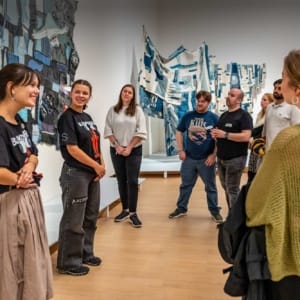
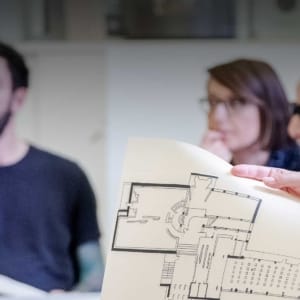
Codesign meetings with working groups on visual impairment and deafness began in September 2023 and lasted until the exhibition opening. Blind and visually impaired participants engaged with the checklist of the selected works, the display, and the curatorial process through hands-on workshops, detailed descriptions, embossed prints, and to-scale reproductions of objects.
Figs. 1–2. Codesign session for the AALTO exhibition, September 2023.

Figs. 1–2. Codesign session for the AALTO exhibition, September 2023.
By discussing and testing the reproductions of the original materials that would be exhibited, we determined which items to reproduce and which would remain unreadable for blind individuals. We quickly realized that plans, elevations, and sections were ineffective spatial representations for those blind from birth, necessitating alternative solutions. Our approach then focused on three-dimensional models and tactile devices to convey the fundamental compositional principles of the designs. With the support of architects and accessibility experts—and with the guidance of blind participants—we described and narrated these principles. For instance, the courtyard of the Experimental House—whose unique external space echoes the house’s volume while including traces of inspiration from the interior—was explained using a small model with a removable core and a tactile table that replicated the brick wall of the courtyard to scale. Similarly the volume of the Viipuri Library was represented by a tactile device that illustrated the compositional principles in three progressive steps: Aalto’s initial idea with a complete parallelepiped, the parallelepiped divided into halves that could be shifted, and the final building design with two main volumes of different heights and the distribution plan.
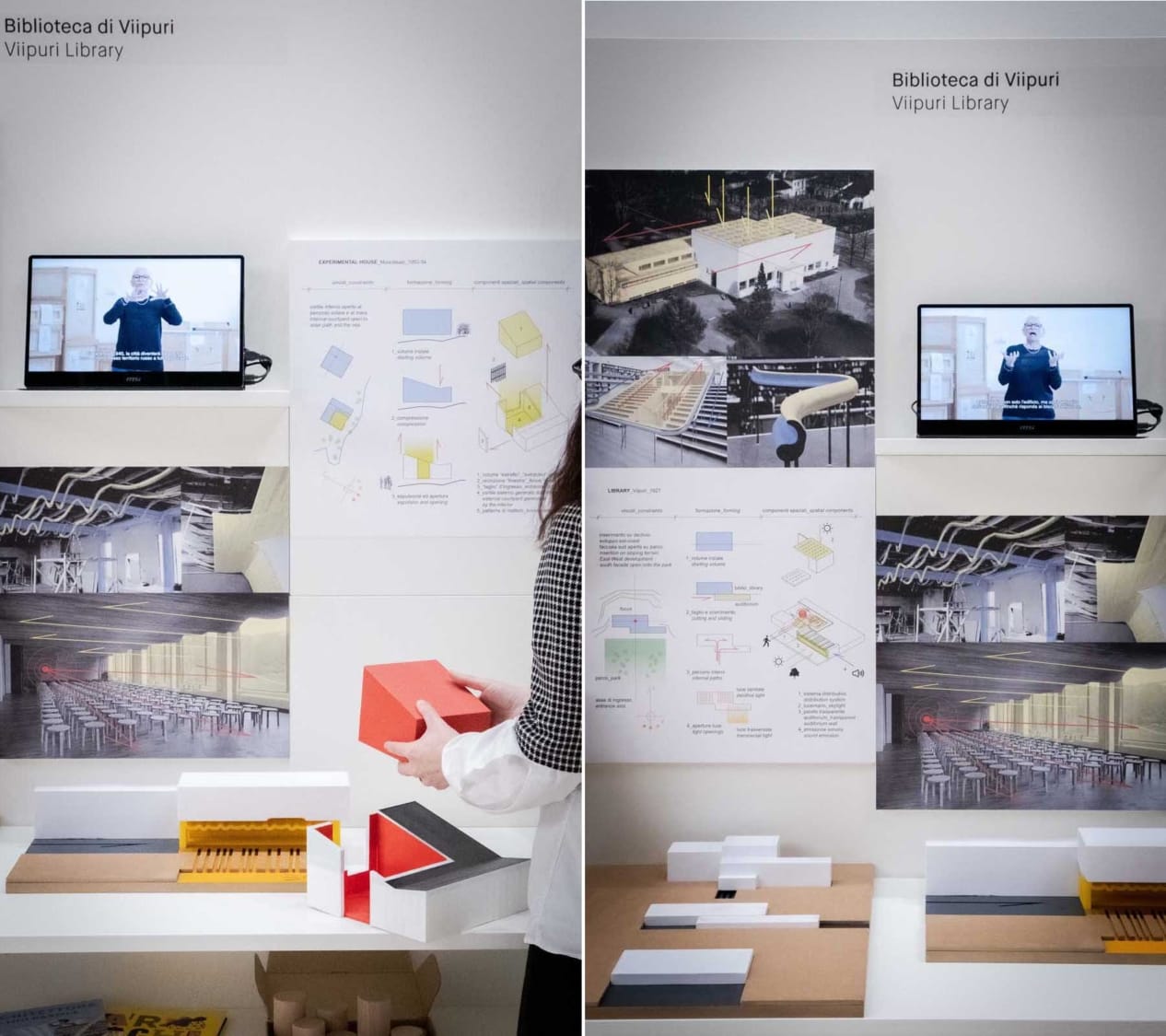
Figs. 3–4. Tactile devices developed to explain the compositional process of Aalto’s buildings.
This process of visually breaking down and understanding the design was also conducted with deaf signers. Thanks to their proficiency in LIS, a visual gestural language, they have developed keen skills in observing and reading images and in interpreting and communicating them.[18] We also asked deaf participants to delve into the architectural contents, educate themselves on their specifics, and identify which project features interested them most. The deaf participants specifically requested the expansion of the projects included in the accessible itinerary, leading to the creation of an accessible wall at the gallery’s entrance, a kind of three-dimensional brochure introducing five projects with a multidisciplinary approach and a DfA strategy.
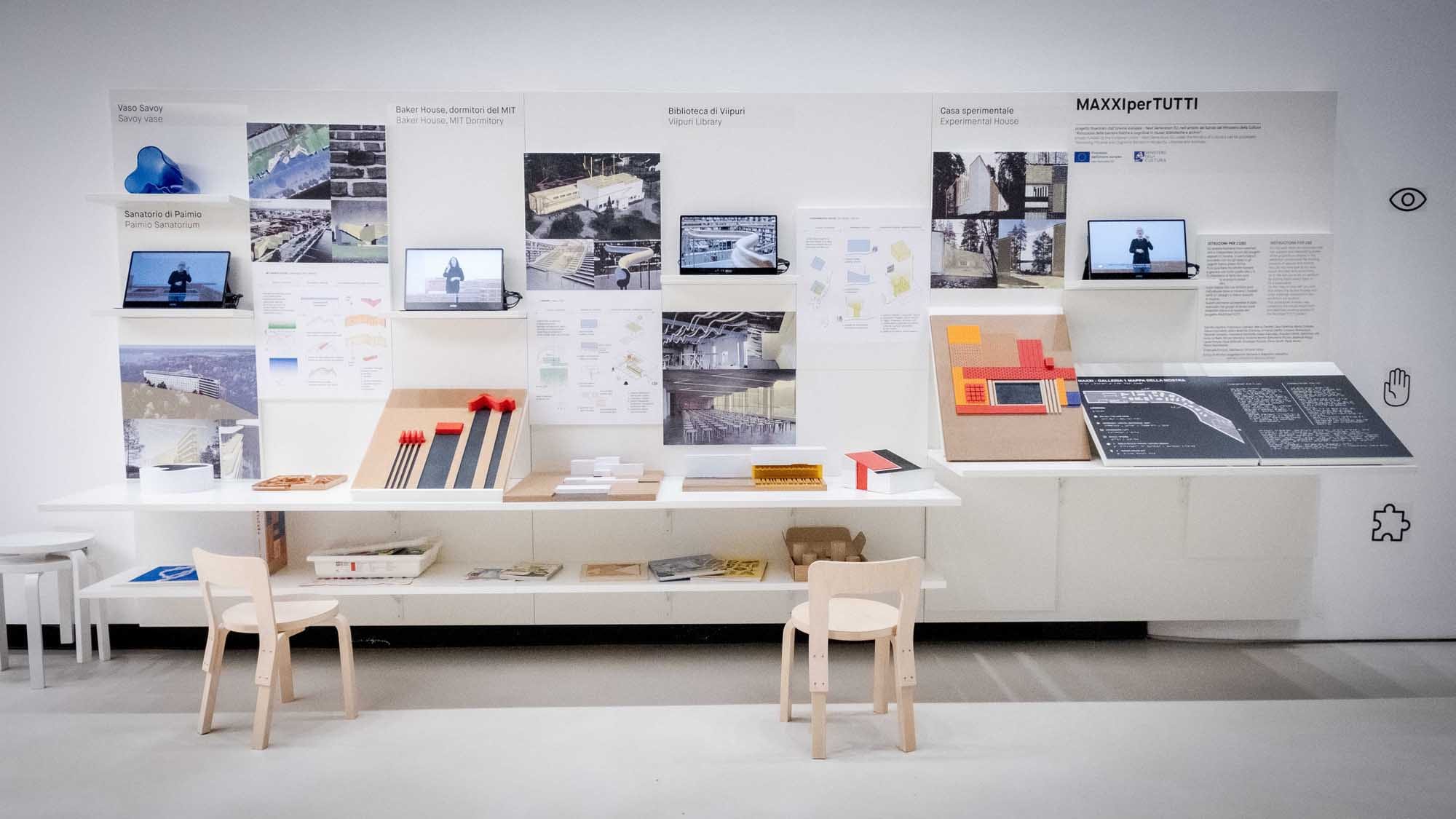
Fig. 5. The accessible wall for the exhibition AALTO—Aino, Alvar, Elissa: The Human Dimension of the Project at MAXXI.
The accessible wall was designed with three levels—sight, touch, and play—corresponding to different heights. At the top level, from two meters to 120 centimeters, visitors could use their eyesight to view drawings, diagrams, photographs, and video guides in LIS. The middle level, from 120 to 70 centimeters, allowed visitors to use their hands to interact with objects and tactile devices. The bottom level, below seventy centimeters, specifically designed for children, featured books and games chosen or produced to explain aspects of the project. Lorenzo, for example, played with this bottom level. Eight years old, he is intelligent, creative, lively, and slightly shorter than average for his age. He attends a Waldorf school. He enjoys museum visits if something piques his interest; otherwise he becomes restless and asks to leave. He loved discovering and playing with tools from the accessible wall.
This arrangement of accessible tools meant that anyone, not just those with disabilities, could find their own access point to the projects on the wall, choosing the approach that best suited their learning style. During the exhibition all kinds of visitors extensively used the wall and islands with tactile materials, including models, embossed drawings, and Braille captions. Museum educators initially used these materials for their own education and later as tools to engage the audiences, because they communicated complex and specialized topics with clarity. These tools were also used, for example, by Sara, thirty-two, art historian and museum educator. She loves her job and is used to accompanying different audiences on visits but finds working with schools, especially high schools, very tiring. It is difficult to be heard by twenty noisy, distracted students. She has found that using tools designed for accessibility such as tactile models and role-play makes it easier to engage everyone.
The accessible wall allowed visitors to interact with the exhibition through drawings, diagrams, photographs, LIS video guides, tactile objects, and specially designed books and games. These features enhanced the experience for all visitors, challenging the assumption that architecture is universally understood and demonstrating the benefits of making exhibitions accessible.
During the exhibition participants from the blind and deaf working groups led workshops and guided tours, enriching the visitor experience.
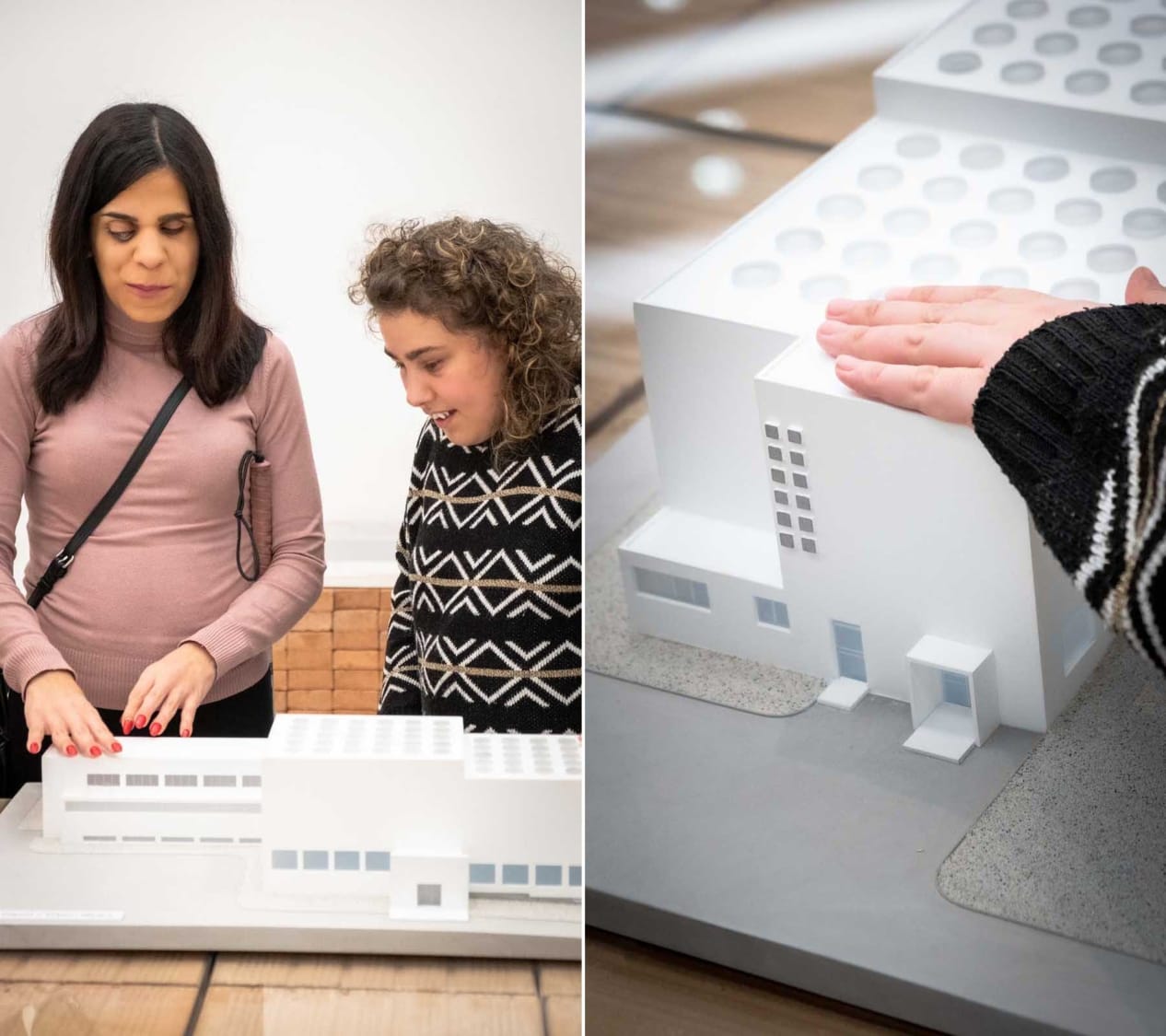
Figs. 6–7. Blind participants of the working team testing the Viipuri Library tactile model.
Evaluation, based on interviews with the working groups, highlighted both challenges and positive results. Let’s start with the challenges: All participants expressed frustration with the limited time available to prepare and meet the exhibition’s opening deadline (just three months), as well as the short duration of the exhibition itself (five months). The codesign process required significant time and effort, and at first it was not clear what everyone’s role was, especially for the deaf individuals involved. LIS narrators were not accustomed to delving into the content; they were used to signing directly from an Italian text rather than signing independently.
Blind participants noted that understanding architecture and its specific features can be challenging. For example, turning technical tools like plans and sections into embossed prints is not helpful. Without a point of comparison, it is hard to grasp the specifics of a project or an architect’s style, which can result in the discussion feeling disconnected and vague. Visually impaired visitors also mentioned issues with the exhibition captions, which were hard to read due to small font sizes, low contrast, and reflective surfaces. More generally they felt their needs were not adequately addressed, as they care little about Braille and tactile models.
On the positive side there were several strengths across the working groups: one major advantage was the willingness of a national museum to listen to the needs of people with disabilities. The direct involvement of people with disabilities in the process and the space provided for their ideas were also appreciated. Teamwork, codesign, and universal design were also highlighted as strengths. These approaches harnessed the skills, lived experiences, and knowledge of people with disabilities for the benefit of all visitors. The meetings with the MAXXI offices helped participants appreciate the variety of professionals behind the exhibitions, emphasizing the concept of a “museum that cannot be seen and cannot be imagined.”[19]
The group also appreciated the openness to change, with everyone willing to adjust and even correct the work in progress. The focus shifted from discussing ideas to making concrete changes that led to accessible services and activities. Participants felt a strong sense of pride and ownership in the exhibition, especially when they were able to see their contributions in action. The involvement of family and friends in visiting the exhibition added to the sense of achievement. Additionally team members took part in internal training sessions for museum staff and external courses for professionals, strengthening their engagement. The close collaboration with local associations was another highlight. Deaf participants appreciated the involvement of deaf LIS interpreters, as well as the supportive and subordinate role played by hearing interpreters. They also praised the production of video narrations in LIS, without the need for translation from Italian texts, which helped build the skills of the deaf mediators through training. Tours and workshops in LIS, designed specifically for the deaf community, were also seen as a positive outcome.
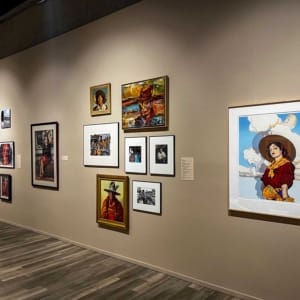
The exhibition Ambienti 1956–2010: Environments by Women Artists II (April 10–November 3, 2024),[20] curated by Andrea Lissoni, Marina Pugliese, and Francesco Stocchi, realized in collaboration with Haus der Kunst in Munich, was a completely different experience. The seventeen works on display were all multisensory environments that engaged visitors in an interactive way. When I visited the exhibition in Munich, an initial version that was later updated and expanded at MAXXI, I was particularly struck by the introductory statement directed at the visitor:
You are entering a new experience.
First of all, feel comfortable.
You will encounter twelve artworks.
They are all unique and they all require different behaviors.
Each can suggest a different position: you can enter, you can stay, you can walk, you can sit, you can dance, you can discover, you can experience freely.
You can touch everything, yet.
Treat them with care, they are delicate.
They may challenge you, Take all your time.
Listen to yourself.
Look Everywhere.
Move through, around, observe.
Share your experience.
Become a cat.
The exhibition encouraged a body- and sensory-focused, active, and playful approach to experiencing the environments.
When reimagining the exhibition for Rome, we realized that not all visitors would adopt a playful, dynamic, and curious attitude toward the space and artworks, like a cat might. Some works, which could only be viewed from the outside with hidden interiors full of potential surprises and challenges, both physical and emotional, might have been intimidating for shyer or older visitors, for example. Visitors with physical impairments might also have found it difficult to access the interiors of certain rooms, and some works could even provoke feelings of discomfort or frustration.
As a result we decided to invite visitors to identify with different animals, each possessing unique, complementary traits. This approach would offer a more inclusive and welcoming experience, avoiding an ableist perspective that focused on any of the visitors’ potential limitations. Instead we envisioned that visitors could choose their animal based on a range of factors, such as their personal preferences—we later discovered that this is indeed how it visitors used the animal profiles.
The three animals were selected because they are widely recognized in the collective imagination for specific, easily identifiable characteristics. While the cat embodies agility and a certain irreverence, the rabbit is quick but cautious, preferring quiet, enclosed spaces for refuge. The elephant, large and slow-moving, has poor vision but a strong sense of hearing, smell, and touch. Finally, the owl, with its sharp eyesight, particularly in the dark, views the world from wide and varied perspectives as it flies. Each visitor could choose an animal based on their preferred way of engaging with the exhibition, whether through visual, auditory, or proprioceptive-motor experiences, as well as their age, physicality, learning style, temperament, and motivation.
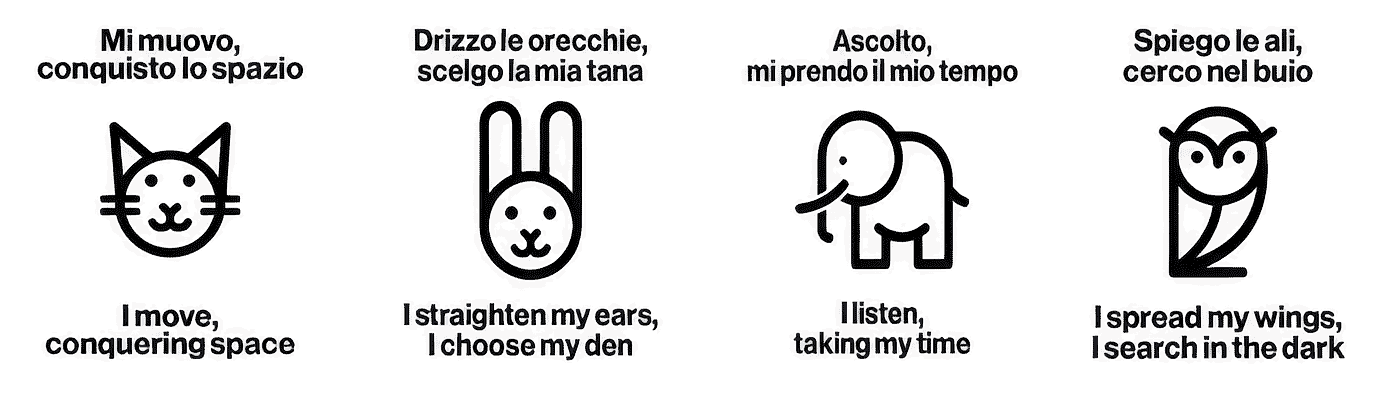
Fig. 8. The animal game for the exhibition Ambienti 1956–2010: Environments by Women Artists II at MAXXI.
This game became an integral part of the exhibition’s design. At the start of the exhibition itinerary, a new statement introduced the interactive concept and provided an overview of the exhibition:
You are in the heart of the museum.
Feel the space around you.
Focus on your body. Listen to it.
It will guide you to discover the works.
Physical perception is a form of knowledge.
Each work suggests different feelings and behaviors.
Choose the one that makes you feel comfortable.
Remember: The works are delicate; treat them with care.
Some will welcome you; others may challenge you.
Each work speaks to us in a different way.
Every person is different.
Every experience is unique.
Some transform us.
This is an invitation to participate.
The visitor was provided with instructions and stickers with animal icons.
Game Instructions:
To focus on listening to your body, we invite you to play this game.
Choose one of the four animals. It will be your access point to the content:
Which one do you recognize yourself in?
Peel off and wear the sticker with your animal.
As you explore the exhibition, look at the caption of each work for hints.
In addition to the traditional captions providing art historical information about the works, we included captions featuring animals that suggested behaviors and possible ways to engage with the works using the body and sensory perception.

Fig. 9. The animal game captions in the Ambienti exhibition.
For example, in Judy Chicago’s Feather Room (1966–2023), a white room without corners, filled with white feathers reaching up to an adult visitor’s calf, the animal captions offered the following suggestions:
The cat says:
Everything invites me to hunt and play, but I remain calm, as my paws sink into the feathers.
The elephant says:
I enter slowly; the environment is silent. As I advance, I feel the light, soft mass of feathers on my paws.
The rabbit says:
I crouch in a soft, white sea.
The owl says:
The room has no edges or points of reference. The space is formless and changeable. Everything is white and silent.
The various education activities with audiences, both with and without disabilities, yielded significant results. The multisensory nature of the works themselves was already a form of accessibility, encouraging the involvement of all visitors.[21] For example, the experience of works by feminist artists, such as Penetración/Expulsión (Penetration/expulsion 1970) by Lea Lublin and A Casa é o Corpo: Penetração, Ovulação, Germinação, Expulsão (The house is the body: penetration, ovulation, germination, expulsion, 1968) by Lygia Clark, offered an immersive and powerful experience, especially when guided by blind women mediators (Rosella and Simonetta) who accompanied visitors while they were blindfolded. Rosella, sixty-seven, despite some health issues and ongoing therapies, is very active; she enjoys skiing and hiking. She became blind in her thirties and is now a sculptor and shiatsu massage practitioner. She has a good memory for shapes and colors. Passionate about art she often visits museums, hoping to find multisensory works that she can touch and share with her companions. She has been attending MAXXI’s activities since 2018, and she has become a museum mediator. Simonetta is sixty-two years old; she has been blind since birth and is an active, sociable, witty, and independent person. She loves cooking and sports, such as fencing and walking, and is incredibly agile. She gets around with her old guide dog. She is computer literate and joined the MAXXIperTUTTI project in 2022.
Experiencing Clark’s work was like a journey back to birth, retracing the path through the mother’s womb toward the light. Visitors relied on blind educators to navigate the dark, immersive environment through touch, encountering a variety of textures, soft floors, hanging strands, and obstacles like orbs slipping beneath their feet or pressing between their legs. The experience evoked mixed emotions: curiosity, discomfort, and discovery. Guided by the gentle yet confident mediation of the two blind educators, visitors were encouraged to focus entirely on touch, heightening their sensory awareness and evoking a sense of fidelity to the original infant experience. At the same time the journey sparked deep, personal sensations, which participants later reflected on in a workshop. Working with the artist Marcella Basso’s large tactile book inspired by Clark’s work, they expressed their impressions: to return to the dark, to slow down, to give oneself time to feel deeply; to be in the belly of the work; to reemerge. The collaboration between blind mediators and museum educators opened new pathways for interpreting the artwork, fostering profound relational dynamics built on trust and the dismantling of preconceived notions. One of the participants was Helia, forty-six, a pharmacist, Iranian expatriate after the birth of the Islamic Republic, mother of two children, and a women’s rights activist. An educated polyglot, passionate about music and poetry, she has often noticed while visiting museums how exhibitions and collections with works from foreign countries are rarely curated by people from those countries. She really appreciated the new and challenging perspective of the blind educators in charge of the activity.
Even audiences with cognitive impairments and autistic visitors—groups we had previously struggled to engage effectively in previous exhibitions like the one dedicated to Aaltos—found a welcoming space in Ambieti. While some works were challenging, the layout and narrative of the exhibition provided clear guidance, helping visitors navigate and enjoy the works by suggesting how to approach them. Although the animal profiles in the design of the game were intentionally crafted to reflect possible overlaps with certain disabilities—the elephant representing people with motor disabilities or blindness, the owl symbolizing deaf individuals, and the rabbit representing people with autism—the actual usage of the game exceeded our expectations. People chose their animal based on a perceived similarity in character or for reasons that were entirely personal and unrelated to their disabilities. Blind female mediators, for instance, turned out to be agile and resourceful cats. Deaf female narrators took on the role of elephants, preferring to stay outside the works. The elephant was also a popular choice, especially among children, while many older visitors preferred the owl. Additionally many visitors embraced the opportunity to impersonate different animals across various works, adopting a range of behaviors as they moved through the exhibition.
Over the seven months of the exhibition, the visitor profile was diverse and broad. Many people who typically do not attend exhibitions came, including a significant number of teenagers and young adults.
Meet some of them:

Figs. 10–11. Visitors wearing animal stickers in the Ambienti exhibition.
The exhibition also attracted many other people who also have disabilities, thanks in part to the cognitive accessibility tools provided, such as the social guide, easy-to-read guide, and Augmented Alternative Communication guide. For example, Antonio, forty-five, suffers from coronary artery disease and asthma. Father of Alberto, a fifteen-year-old with Down syndrome, he recently started visiting museums with his son, finding the staff welcoming and helpful. They participated in a guided tour to the exhibition; although Alberto didn’t fully understand all the content, he enjoyed the experience, appreciating touching the artworks without anyone saying “no” and spending time with his father. Moreover, he thought the educator was wonderful!
The codesign process, involving MAXXI staff and disability working groups, along with the work of the accessibility group and constant interaction with the public through educational activities, led the Public Engagement office to draft a set of guidelines for designing future exhibitions (indicators). This document is meant to be a tool for curators and exhibition designers, both internal and external to the museum, to ensure that key aspects of accessibility and inclusion are prioritized.
Design Indicators for Audience Access and Engagement: A Descriptive and Performance-Based Approach to Meeting Visitors’ Needs and Wishes is a descriptive, rather than prescriptive, document. It compiles a list of needs and suggestions expressed directly by the audience, gathered over years of work and, most importantly, over the first eighteen months of the MAXXIperTUTTI project.[22] The focus of the document is on what design can do for and with people, rather than prescribing specific solutions. The final design choices are made independently by the curator and architect to achieve the desired outcomes. One of the core strategies the document emphasizes is the DfA approach, which is defined as “the design for human diversity, social inclusion, and equality”.[23] The goal is to provide the same experience of space to everyone, using diverse solutions that address different abilities, disabilities, ages, genders, and cultures. In the DfA framework needs go beyond basic physical requirements (such as accessibility) to include cognitive and sensory needs (e.g., pathfinding), as well as social needs like security, comfort, well-being, privacy, and inclusion. This approach aims to accommodate the broadest possible spectrum of people, both with and without disabilities.
The document offers a few key suggestions:
Ongoing interactions with visitors, especially those with disabilities, have enabled MAXXI staff to develop new strategies for improving the museum experience for all. Firsthand feedback from visitors provides valuable insights into their challenges, needs, and desires. This information is gathered through direct observation, conversations, and careful analysis of user involvement (such as shadowing).
These are the design indicators for curators and exhibition designers:
To help curators and designers meet these indicators, we have included profiles of real MAXXI visitors, created using the design-thinking method of personas. The goal is to encourage museum professionals to think beyond themselves and people similar to them when planning exhibitions. Shifting the mindset to embrace inclusive and accessible approaches is essential for achieving high-quality outcomes. Accessibility should not be treated as an afterthought or a set of add-ons to fix existing gaps, but as an integral part of the design process.
The document lists a selection of personas portraying people met while developing these exhibitions. These design indicators in the next future will also be developed for digital communication, supporting the design of websites, advertising campaigns, graphic design, visual identity, and museum branding.
In conclusion universal and inclusive design offer a compelling approach that can inspire experimental and innovative solutions for curators and architects, focusing on the access needs we all share as we are positioned somewhere on the access spectrum. Accessibility, viewed as a holistic approach, is a broad and interdisciplinary field that should touch every aspect of the museum experience, from strategic planning to recruitment policies, from workflows to Braille captions in the gallery.
Head of the public engagement and training offices of MAXXI, National Museum of 21st-Century Arts, Sofia Bilotta is a lecturer in museum and heritage education at the School of Specialization in Historical and Artistic Heritage, Faculty of Arts and Philosophy at Sapienza, University of Rome, and a member of ICOM Italy’s Working Group for Accessibility. She is an art historian and museologist, as well as a museum education expert in accessibility, outreach, and public engagement. In her work she focuses on developing the relevance and social impact of the museum through participatory and emancipatory approaches with the museum community: public, staff, and stakeholders. For twenty years she has coordinated and led teams of professionals in the design and implementation of processes and activities for museum audiences. She is a trainer in both the museum and academic fields. She designs and realizes training courses for MAXXI, in Italy and abroad, on traditional and emerging heritage professions.
[1] See just a few milestones: Eilean Hooper-Greenhill, The Educational Role of the Museum (London: Routledge, 1994); Pat Villeneuve and Ann Rowson Love, Visitor-Centered Exhibitions and Edu-Curation in Art Museums (Lanham, MD: Rowman & Littlefield, 2017); Graham Black, Museums and the Challenge of Change: Old Institutions in a New World (London: Routledge, 2021).
[2] Yuha Jung and Ann Rowson Love, Systems Thinking in Museums: Theory and Practice (Lanham, MD: Rowman & Littlefield, 2017); Maria Chiari Ciaccheri, Museum Accessibility by Design: A Systemic Approach to Organizational Change (Lanham, MD: Rowman & Littlefield, 2022).
[3] Bernadette Lynch, “‘Good for you, but I don’t care!’: Critical Museum Pedagogy in Educational and Curatorial Practice,” in Contemporary Curating and Museum Education, ed. Carmen Mörsch, Angeli Sachs, and Thomas Sieber (Bielefeld: Transcript, 2016); Amanda Cachia, “Disability, Curating, and the Educational Turn: The Contemporary Condition of Access in the Museum,” OnCurating, no. 24 (2014).
[4] Wendy Ng, Syrus Marcus Ware, and Alyssa Greenberg, “Activating Diversity and Inclusion: A Blueprint for Museum Educators as Allies and Change Makers,” Journal of Museum Education 42, no. 2 (2017): 142–54; Lorna Cruickshanks and Merel van der Vaart, “Understanding Audience Participation Through Positionality: Agency, Authority, and Urgency,” Stedelijk Studies Journal 8 (2019), DOI: 10.54533/StedStud.vol008.art02.
[5] Il pubblico dei musei d’arte contemporanea (Roma: Centro Studi e Ricerche Associazione Civita, 2021); Francesco De Biase (ed.), I pubblici della cultura. Audience development, audience engagement (Milan: FrancoAngeli, 2014); Mariselda Tessarolo (ed.), L’arte contemporanea e il suo pubblico. Teorie e ricerche (Milan: FrancoAngeli, 2009).
[6] Joe Barton and Simon Hayhoe, Emancipatory and Participatory Research for Emerging Educational Researchers: Theory and Case Studies of Research in Disabled Communities (Abingdon: Routledge, 2023).
[7] This is the slogan of the international disability rights movement.
[8] So far we have not yet systematically addressed multicultural issues with immigrant communities, particularly in terms of diversifying our museum staff.
[9] Jocelyn Dodd, Richard Sandell, Debbie Jolly, and Ceri Jones, Rethinking Disability Representation in Museums and Galleries (Leicester: Research Centre for Museums and Galleries, 2008); Nina Simon, The Participatory Museum (Santa Cruz: Museum 2.0, 2010).
[10] On intersectionality and the interrelationships of gender, class, race, and ethnicity, and other social
divisions, see two founding studies: Kimberlé Crenshaw, “Demarginalizing the Intersection of Race and Sex: A Black Feminist Critique of Antidiscrimination Doctrine, Feminist Theory and Antiracist Politics,” University of Chicago Legal Forum 1989, no. 1 (1989): 139–67; Nira Yuval-Davis, “Intersectionality and Feminist Politics,” European Journal of Women’s Studies 13, no. 3 (2006): 193–209.
[11] On this issue see the changing motivation-based identities that John Falk divided into five categories
of visitors: the explorer, the facilitator, the experience seeker, the professional/hobbyist, and
the recharger. See John H. Falk, Identity and the Museum Visitor Experience (Walnut Creek, CA: Left Coast Press 2009).
[12] Alison F. Eardley and Vanessa E. Jones (eds.), The Museum Accessibility Spectrum: Re-imagining Access and Inclusion (n.p.: Routledge 2025).
[13] Launched in June 2023 MAXXIperTUTTI is a broad initiative funded by the European Union through the National Recovery and Resilience Plan (NRPP), a strategic initiative developed by the government of Italy as part of the European Union’s broader response to the economic impact of the COVID-19 pandemic. It is designed to help the country recover from the pandemic’s adverse effects and strengthen its economy by focusing on several key areas such as infrastructure, digital transformation, education, health, and environmental sustainability. The NRPP is Italy’s version of the Recovery and Resilience Facility, which was established as part of the NextGenerationEU recovery plan, a €750-billion financial program launched by the European Commission. MAXXIperTUTTI is funded by M1C3—Investment 1.2—Non-MIC public and private institutions. Removal of physical and cognitive barriers in museums, libraries and archives to enable wider access and participation in culture.
[14] See the MIXT. Museums for All project: https://mixt.it/.
[15] Associations and cultural institutions involved in the project are Italian Union for the Blind, Rome Section; National Agency for the Deaf, Latium Region Council; SILIS Italian Sign Language Research and Information Group; Italian Association of People with Down Syndrome, Rome Section; Sant’Alessio-Margherita di Savoia institute for the Blind; National Tactile Museum Omero; Leonarda Vaccari Institute; Association Museum ODV; ASL Roma 1, a local health agency in the Lazio region. The cooperatives Isidea and aCapo joined the working team on cognitive disabilities.
[16] Outi Salonlahti and Sari Salovaara (eds.), Accessibility and Diversity Checklist for Museums (n.p.: Culture for All Service / For Culture on Equal Terms and the Finnish National Committee of ICOM, 2022), https://icomfinland.fi/app/uploads/2023/08/Accessibility_and_diversity_checklist_for_museums.pdf.
[17] Lorenza Baroncelli and Joseph Grima (eds.), AALTO—Aino Alvar Elissa: la dimensione umana del progetto/The Human Dimension of Design (Rome: MAXXI, 2023).
[18] Virginia Volterra, Maria Roccaforte, Alessio Di Renzo, and Sabina Fontana, Descrivere la lingua dei segni italiana. Una prospettiva cognitiva e sociosemiotica (Bologna: Il Mulino, 2019).
[19] Cit. from evaluation reports.
[20] Andrea Lissoni, Marina Pugliese, and Francesco Stocchi (eds.), Ambienti 1956–2010: Environments by Women Artists II (Rome: MAXXI, 2024).
[21] Nina Sobol Levent and Alvaro Pascual-Leone (eds.), The Multisensory Museum: Cross-Disciplinary Perspectives on Touch, Sound, Smell, Memory and Space (Lanham, MD: Rowman & Littlefield, 2014).
[22] Compared to 2021, the baseline year of the MAXXIforTUTTI project, in 2024 we had an 80 percent increase in visitors with disabilities. After the Ambienti exhibition the figures gradually started to stabilize at lower percentages.
[23] EIDD, 2004