• Journal
    • Journal Issues
      • Current Issue – Issue #14
      • Issue #13
      • Issue #12
      • Archive
    • About the Journal
      • Aims and Scope
      • Author Guidelines
      • People
      • Ethics
    • Journal Search
      • Search all Journal Articles
  • Projects
    • Research Projects
      • Stedelijk Studies Masters
      • Mortality as Matter
      • Here for Now, Then and There
      • Sketches For The Future
      • Lines of Sight
      • Staff Shares
      • Rakurs
    • Fellowships
      • MMCA Studies x Stedelijk Studies Editorial Fellowship
      • Stedelijk x C& Editorial Fellowship
      • Editorial & Research Fellowships & Fellows
    • Exhibitions
      • MODERN — Van Gogh, Rietveld, Léger and others
      • Exhibition Felix de Rooy — Apocalypse
      • IT’S OUR F***ING BACKYARD
      • Surinamese School
    • Szine
      • Szine is an irregularly published zine that shares pressing research on the subjectivity of the museum in the cultural landscape
    • All projects
      • Ranging from brisk exhibitions to long-term research initiatives, encompassing Szine and Stedelijk Museum Fellowships
  • Research Logs
  • Essays
  • Conversations
  • About
    • About Stedelijk Studies
    • Collaborations
    • People
    • Contact
  • Search
  • Menu Menu
  • Link to Instagram Link to Instagram Link to Instagram

Thomas Bellinck, The House of European History in Exile, 2013. © Danny Willems.

DOWNLOAD PDF

Theme: The Borders of Europe

Art and Cultural Memory in the EU since the Maastricht Treaty

THEME OUTLINE

The contemporary European Union, as established in the Maastricht Treaty of 1992, is a failed project according to many. A convincing model for a political union of Europe for its citizens could never truly take shape. The Eurozone, or EMU, experiences crisis after crisis: while the European debt crisis seems barely to have reached its end, Brexit may cause further economic collapse and disruption. Meanwhile, terrorist attacks instill deep fears on many levels, and the immigration crisis is tearing Europe apart. The latter has led to the largest European-wide humanitarian crisis in recent memory, which prompts a fundamental public debate on the EU’s internal and external borders.

What roles do the arts, cultural heritage, and cultural memory assume in the contemporary European integration project, from the Maastricht Treaty to its current coalition of twenty-eight member states? In 2002 architect Rem Koolhaas could still optimistically design a new European Union Flag, based on the colors of the national banners of all member states. In 2014 artist Remco Torenbosch conducted a much more critical research into the history of the European Flag through its (disappearing) textile industries. A host of other artists and cultural producers from various European member states have critically reflected on the political, socioeconomic, and cultural aspects of today’s European Union as well.

Engaging in such reflective projects, this issue of Stedelijk Studies intends to contribute to the historical and critical discourse on the EU and the European integration project in the specific field of the arts since 1992. It aims to explore whether this defining political moment is also indicative of a shift in the critical discourse in contemporary art: from addressing the split and reunification of Western and Eastern European art since 1989 towards more contemporary European issues and concerns, in search of a shared European identity in a global context. Is it true that the contours of such a new European concept and identity take shape in the informal, transnational cultures of the arts, as the Vice President of the European Commission, Frans Timmermans, suggested at the WEurope Festival in June 2016? Or should this propitious view be questioned with regard to European policy-making as it mediates and funds rather particular artistic developments and trends, often intersected with the promotion of creative industries?

A critical reflection on Europe, the EU, and the European project from the perspective of contemporary art since the Maastricht Treaty can help expand our cultural understanding of the EU. The underlying aim of this “European issue” is to counterbalance the dominant focus in journalistic media and academic texts on the social, economic, and political challenges of the EU through a critical investigation of closely related European topics in the intertwined realms of art, history, and culture.

Suggested topics may include, but are by no means limited to:

  • Artistic practices relating to and critically engaging with the European project
  • Contemporary exhibitions addressing the EU and/or shaping tomorrow’s Europe
  • Historical exhibitions and projects on European art before 1989, (e.g., Westkunst at the Ludwig Museum, Cologne, 1981), and after 1989 (e.g., After the Wall. Art and Culture in Post-Communist Europe at the Moderna Museet, Stockholm, 1999–2000)
  • EU cultural policies specifically stimulating European art and culture, such as the European Capitals of Culture, Manifesta (The European Biennial of Contemporary Art), or (the controversy on) the House of European History in Brussels, among others
  • Museum policies and strategies regarding contemporary European art and culture
  • The culture and politics of memory in regard to the (re-)creation of the EU
  • Reflections on EU cultural governance and European cultural politics: how does it work?
  • Historical and/or contemporary developments in European culture with regard to issues of postcolonialism and globalization

This themed issue, Borders of Europe, will be edited and curated by Dr. Sjoukje van der Meulen and Dr. Nathalie Zonnenberg.

Stedelijk Studies is a high-quality, peer-reviewed academic journal, which publishes research related to the collection and on the institutional history of the Stedelijk Museum Amsterdam, museum studies (such as education and conservation practice), and current topics in the field of visual arts and design.

SUBMISSION

Please submit your abstract before March 3, 2017.

Deadline for the essays will be June 9, 2017.

Stedelijk Studies accepts both solicited and unsolicited texts for consideration on a rolling basis throughout the year. Prior to developing a complete manuscript, authors are asked to submit an abstract (300 words max.) with short bio (150 words max.) and 3-5 key bibliographic sources to the editors, who will make a preliminary decision regarding the topic’s relevance to the journal’s aims and scope and will provide suggestions for developing the manuscript.

Manuscripts and manuscript proposals, as well as abstracts and other editorial correspondence, should be sent to:

Esther Dekker
Managing editor Stedelijk Studies
[email protected]

Van Baerlestraat 31
1071 AN Amsterdam
Postal address:
Postbus / P.O. Box 75082
1070 AB Amsterdam

Call for Papers Archive
Stedelijk Studies Masters 2026
May 1, 2026/by Stedelijk

Call for Submissions: Stedelijk Studies Masters 2026

Stedelijk Studies #15: Audiences for Contemporary Art Museums
June 13, 2024/by Stedelijk

Call for Research  Stedelijk  Studies Journal  #15

Submission deadline: September 2, 2024
Stedelijk Studies Master’s Research
May 1, 2024/by Stedelijk

Stedelijk Studies Masters

Stedelijk Studies is currently welcoming Master’s Theses on and relating to the Stedelijk Museum Amsterdam and its collection.
FANDANGOS NR. 6 Creators: Raul Marroquin - editor, Marjo Schumans - editor, Agora Studio - publisher, Jan van Eyck Academie - printer. Donation Artists' Books Johan Deumens, Landgraaf.
December 19, 2022/by Stedelijk

Call for Research  Stedelijk  Studies Journal  #14

Submission deadline:  March 20, 2023
AnnaMaria Pinaka, “untitled” (part of series Thirsty Pig), 2022. Ink and watercolors. Photo by AnnaMaria Pinaka.
July 26, 2022/by Stedelijk

Call for Research  Stedelijk  Studies Journal  #13

*CLOSED*
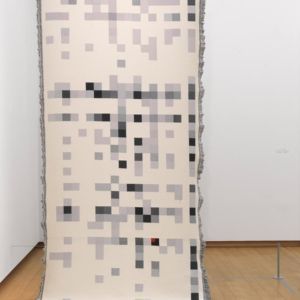
Design by Rossella Biscotti, executed by Textiellab Tilburg, 10 x 10 (Acquired Nationality), 2014. Stedelijk Museum Amsterdam, object no. 2015.1.0418(1-2).
January 31, 2022/by Stedelijk

Call for Research  Stedelijk  Studies Journal  #12

*CLOSED*
Figure 3b. Detail
December 11, 2020/by Stedelijk

Call for Papers – Stedelijk Studies Spring 2021

*CLOSED*
Stedelijk Studies Spring 2020 – Call for Papers
May 6, 2019/by Editor

Stedelijk Studies Spring 2020 – Call for Papers

*CLOSED*
January 15, 2019/by Editor

Stedelijk Studies Fall 2019 – Call for Papers

*CLOSED*
July 10, 2018/by Editor

Stedelijk Studies Summer 2019 – Call for Papers

*CLOSED*
November 17, 2017/by Editor

Stedelijk Studies Summer 2018 – Call for Papers

*CLOSED*
January 13, 2017/by Editor

Stedelijk Studies Summer 2017 – Call for Papers

*CLOSED*
February 1, 2015/by Stedelijk

Stedelijk Studies Fall 2015 Performance – Call for Papers

*CLOSED*
Photo: Gert-Jan van Rooij
October 28, 2014/by Stedelijk

Stedelijk Studies Fall 2016 – Call for Papers

*CLOSED*

Yayoi Kusama

YAYOI KUSAMA
PRE-SALE NOW LIVE
Exhibition — Sep 11, 2026 till Jan 17, 2027

Newsletter

Subscribe to Stedelijk Museum’s Academic Newsletter.

Share this page

  • Facebook Facebook Share on Facebook
  • Whatsapp Whatsapp Share on WhatsApp
  • Pinterest Pinterest Share on Pinterest
  • Linkedin Linkedin Share on LinkedIn

Stedelijk Studies on Instagram

Connect to Stedelijk Studies on Instagram

Subscribe to the Stedelijk Museum Academic Newsletter

Get the latest research, insights, and updates from Stedelijk Studies. Subscribe to the Stedelijk Museum’s Academic Newsletter.

© 2026 Stedelijk Studies.
  • Link to Instagram Link to Instagram Link to Instagram
  • Disclaimer
  • Colophon
  • Contact
  • Cookie Policy
  • Privacy Statement
Scroll to top Scroll to top Scroll to top
Stedelijk Studies
Manage Consent
To provide the best experiences, we use technologies like cookies to store and/or access device information. Consenting to these technologies will allow us to process data such as browsing behavior or unique IDs on this site. Not consenting or withdrawing consent, may adversely affect certain features and functions.
Functional Always active
The technical storage or access is strictly necessary for the legitimate purpose of enabling the use of a specific service explicitly requested by the subscriber or user, or for the sole purpose of carrying out the transmission of a communication over an electronic communications network.
Preferences
The technical storage or access is necessary for the legitimate purpose of storing preferences that are not requested by the subscriber or user.
Statistics
The technical storage or access that is used exclusively for statistical purposes. The technical storage or access that is used exclusively for anonymous statistical purposes. Without a subpoena, voluntary compliance on the part of your Internet Service Provider, or additional records from a third party, information stored or retrieved for this purpose alone cannot usually be used to identify you.
Marketing
The technical storage or access is required to create user profiles to send advertising, or to track the user on a website or across several websites for similar marketing purposes.
  • Manage options
  • Manage services
  • Manage {vendor_count} vendors
  • Read more about these purposes
View preferences
  • {title}
  • {title}
  • {title}