Follow a manual added link
ESSAY
Surinamese School: Reflections on History, Art, Decolonization and Cultural Identity
by Azu Nwagbogu
by Azu Nwagbogu
Coincidentally, or perhaps not, this period corresponds to the famed, so-called Golden Age of Dutch art, as it is venerated and canonized in the paintings of among others Johannes Vermeer, Judith Leyster, Frans Hals and, of course, Rembrandt. In the same period that the Dutch gave Europe and the rest of the world its most humane moment in culture, they were spreading a special form of displacement and misery with Empire and the colonial enterprise. Independence from Spanish Catholic rule lead to rapid expansion and economic growth, which brought cultural assuredness and bursting national pride. During this period, Dutch art was dominated by paintings of mundane contemporary life, domestic scenes, still-lifes, and portraits (largely commissioned by the rising middle classes). The cultural moment was replete with images that represented joyous humanity at its ordinary best. It was an ode to freedom. This stands in stark contrast to the invasion, colonization, and commodification of Brown and Black bodies in Suriname during the very same period.
Whilst domestic scenes, still-lifes, and peaceful coexistence amongst the European Dutch was essentialized and visualized, the inhabitants of Suriname were facing their most existentialist struggle as a people united under enslavement. Surinamese School’s essence is in overturning the once-standard historiographical narrative that sought to instill an abiding sense of illegitimacy in these disparate peoples by offsetting the human misery intrinsic to the colonial system against the culturally ‘civilizing’ and socio-economically beneficial effects of their subjugation. This overturning is the first prerequisite for essentialization. This is both at the core in life, as well as its representation in visual culture.
The second prerequisite for essentialization is a consequence of the abrupt circumstances in which Suriname gained its independence. The offering of social, cultural, political, and economic autonomy at the same time as adding orphanhood to its imposed ‘illegitimacy’, was in keeping with the ideology of exploit and maximize and then move on. A significant minority of the country’s population had resisted the drive for full independence from the Netherlands, fully aware of the cynicism of the timing and conditions. Surinamese Independence was nevertheless allowed to proceed in 1975, at a time when the ever-increasing sums in development aid and other subsidies the Netherlands was having to divert to the once-profitable colony were becoming politically problematic. Suriname had thus been cut adrift as an unwanted orphan whilst still laboring under the sway of a colonial ideology that precluded the possibility of conceiving of itself as a sovereign entity with a legitimate political, socio-economic, or cultural identity. Hence the second prerequisite for Suriname to achieve cultural essentialization: for Surinamese artists to embrace the creative freedom afforded by their sudden orphanhood to fully draw upon their historically and culturally mixed artistic heritage.
The ‘illegitimacy’ imposed by the Netherlands and the orphanhood imposed by the circumstances under which Suriname attained political sovereignty have combined to make Suriname, as a cultural entity, emblematic of the challenges faced by a multi-ethnic decolonizing state in a globalized world. With its awkward geographical location; not culturally part of the continent it occupies, Suriname’s complex history has made it one of the most ethnically and culturally diverse countries in the world, with people of predominantly Amerindian, African (Creole and Maroon), ethnic Indian (South Asian), Javanese, Chinese, European, and multiracial origin. Whilst this diversity is fully reflected in its visual art, the legacy of colonial image histories, and the ideologies underpinning them, have distorted our view of this rich artistic heritage and prevented us from appreciating the wealth and variety of the visual world it explores. It is not only because of the ‘legacy assets’ of the colonial images themselves, but also because of the barriers raised by the way they have trained our eyes to overlook countervailing images which lie hidden in plain sight; undocumented, unheralded, and abandoned. That the abundant proof of the range and power of the Surinamese art tradition presented in this exhibition had not hitherto become ‘legacy assets’, available to present a counterbalancing narrative to the prevailing colonial one, is not the result of an unfortunate oversight or mere happenstance. Rather, it is part of a process which began at the colonial stage of Suriname’s development, in which each of the exploited groups was forced by the dynamics of survival under the divide and conquer modus operandi of the colonizer, to expend all reserves of energy in justifying their presence, nay, their very existence, in a manner which necessarily made an ‘other’ of all other ethnic and cultural groups. This process recalls Toni Morrison’s oft-quoted words, which were part of a talk and panel discussion at Portland State University in 1975:
“The function, the very serious function of racism is distraction. It keeps you from doing your work. It keeps you explaining, over and over again, your reason for being. Somebody says you have no language and you spend twenty years proving that you do. Somebody says your head isn’t shaped properly so you have scientists working on the fact that it is. Somebody says you have no art, so you dredge that up. Somebody says you have no kingdoms, so you dredge that up. None of this is necessary. There will always be one more thing.”
It has been understandably difficult for a consensual Surinamese cultural identity to emerge from this tumult of inherently discordant ethnic identities, each under pressure to supply its raison d’être. This has created a status quo in which Surinamese Art has become a “loose, baggy monster” — to borrow Henry James’ characterization of the 19th century novels of Tolstoy and Dostoevsky—from which nothing is definitively excluded, but to which equally nothing can definitively be said to belong. Under the circumstances, perhaps the more pertinent question is not who qualifies to be counted as a Surinamese artist for the purposes of the broad, rich and deep current of painting and photography on display in this exhibition at the Stedelijk Museum Amsterdam, but rather: who does not? As the recurring motifs of survival, rituals, middle class existence, exploitation, shared nationhood, independence, migration, emigration and striving for cultural and socio-economic autonomy pass through the conceptual prisms of illegitimacy and orphanhood encapsulating Suriname’s recent history, contemporary artworks from Suriname can be seen allegorically as akin to telescopic images which have been turned upside-down and flipped back-to-front by the internal reflection of artists demonstrating differing levels of artistic essentialization. By essentialization I mean the process of autonomously, so without reference to the colonial framing, achieving a synthesis which assimilates, embraces, and outwardly reflects the disparate historical, ethnic and cultural inputs comprising the identity of Suriname (or any other polity) in its artistic output.
This chronological overview of Surinamese painting is accordingly best evaluated through the prism of a striving for artistic essentialization. This enables the work to be assessed in relation to the burden of the historical legacies of imposed ‘illegitimacy’ and orphanhood on Surinamese culture which must be comprehended and either rejected or embraced for artistic essentialization to be achieved. The former legacy has constrained Surinamese artists from asserting their identity in respect of the mixed heritage born of a tortuous history, ethnography and ethnology. The latter legacy has constrained them from laying claim to the full richness of the historical and cultural influences not only of the ethnic groups to which they belong, but of the hybrid and still-developing common Surinamese identity. Surinamese School overview enables us to discern the common threads in the tangled skein, from the Dutch master compositional traditions of the European colonists which have influenced the choice and compositional approach in the predominant medium of painting to the African diaspora themes and experiences and latent sculptural essence which resonate in so many of the artists’ work, to Javanese and South-Asian influences. From this diverse array of work we begin to see that, regardless of ascertaining what exactly Surinamese art is, or what makes Surinamese art Surinamese, is an explicit concern: these artists are all contributing, in their distinctive ways, to a final synthesis, in which what is being constructed on the platform for decolonized historiography and imagery is not a rejection, but rather an adoption of all influences, whether from the indigenous peoples who have continually occupied Suriname, the European colonists, the African enslaved peoples who were transported there against their will, or the successive waves of migrant workers from Indonesia, South Asia, and the Middle East.
However, a platform for a decolonized historiography is an endless infinitude. Culture evolves and decolonization is a constant and continuous exercise much like maintaining personal hygiene; it never ends. Handwashing and sanitization are a constant effort. The artists in this exhibition are hybridized, but nevertheless Dutch artists. The essence and meaning within this exhibition is the return of lost sheep, the one missing from the canon. The Surinamese School exhibition rejects the ‘illegitimacy’ and embraces the shared historical and cultural influences of the Dutch canon, albeit with its own specificities and nuances. The artists who form the foundation of this exhibition were seduced by the idea of a common humanity. Their essentialization was not in place at the time of Suriname’s independence. Nations created as a matter of the colonial premise and enslavement of peoples have the right to continuously determine where they find comfort and what they define as home. In fact, the immediate pre-independence period was a time of chaos, fear and disunity, with roughly a third of the Surinamese population having fled to the Netherlands, fearing for its prospects in the newly independent state. After the accelerated economic decline and degeneration of Surinamese politics into ethnic polarization and corruption in the immediate post-independence period, another estimated 15% of the population migrated to the Netherlands, meaning that the newly independent Suriname had lost just under half of its population in those years.[i] In 1980 a military coup reflecting widespread societal dissatisfaction with the economic stagnation and political strife swept aside the elected civil government. Nonetheless this exhibition, which covers the period from 1910 to 1985—five years after the coup—traces the progress which has been made towards essentialization in Surinamese art.
The current exhibition was conceived as the repurposing of an original proposal for a show about Nola Hatterman—a white Dutch artist, who emigrated to Suriname in midlife—and her students, indicating that the colonial hierarchy continues to be observed in cultural framing and programming. In this implicit hierarchy, Surinamese artists such as Erwin de Vries, Armand Baag, Jules Chin A Foeng, Wim Bos Verschuur and Leo Glans could only be conceived of as meriting serious artistic consideration once framed in relation to a legitimacy-conferring Dutch teacher. Although Hatterman was an ally and a formidable teacher, her insistence on figurative painting met with resistance and diluted her influence with younger artists in her later years. Nevertheless, she was a rebel against colonialism who encouraged several of the other artists featured in this exhibition. It is as though their artistic existence and value is not absolute and independent of extraneous factors—and would not ordinarily have been judged worthy of the scholarly investment—but remains accidental and conditional on their relationship with the worthy Hatterman. As it happens, the didactic theme is indeed the key to understanding the evolution of Surinamese pictorial art from 1910 to 1985; stumbling upon this was perhaps a serendipitous consequence of the exhibition’s provenance. Nonetheless, it is clear from this exhibition that it was the Creole dramatist, screenwriter, artist, politician, and activist Wim Bos Verschuur, not Hatterman, who had the greatest influence on Surinamese artists in the period covered by the exhibition.
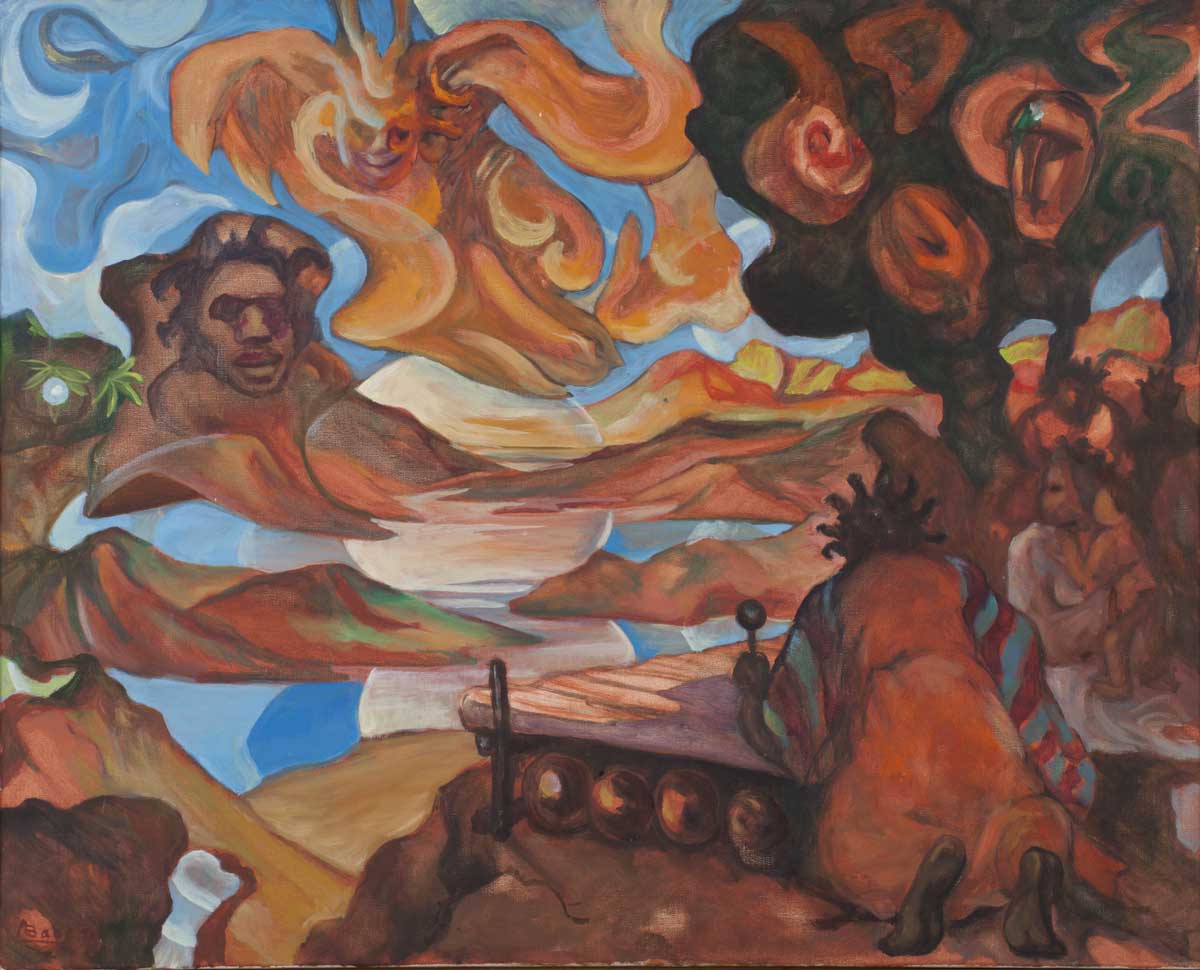
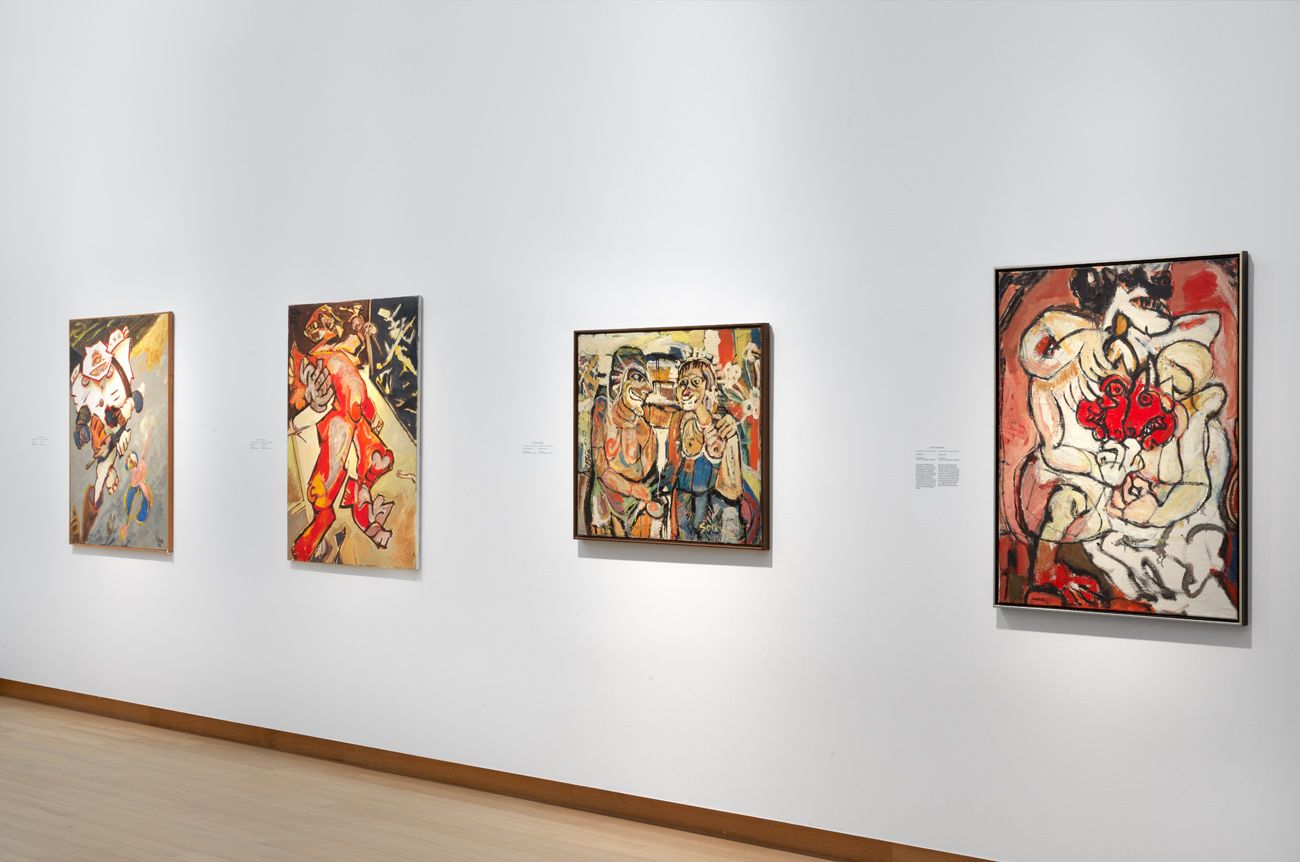
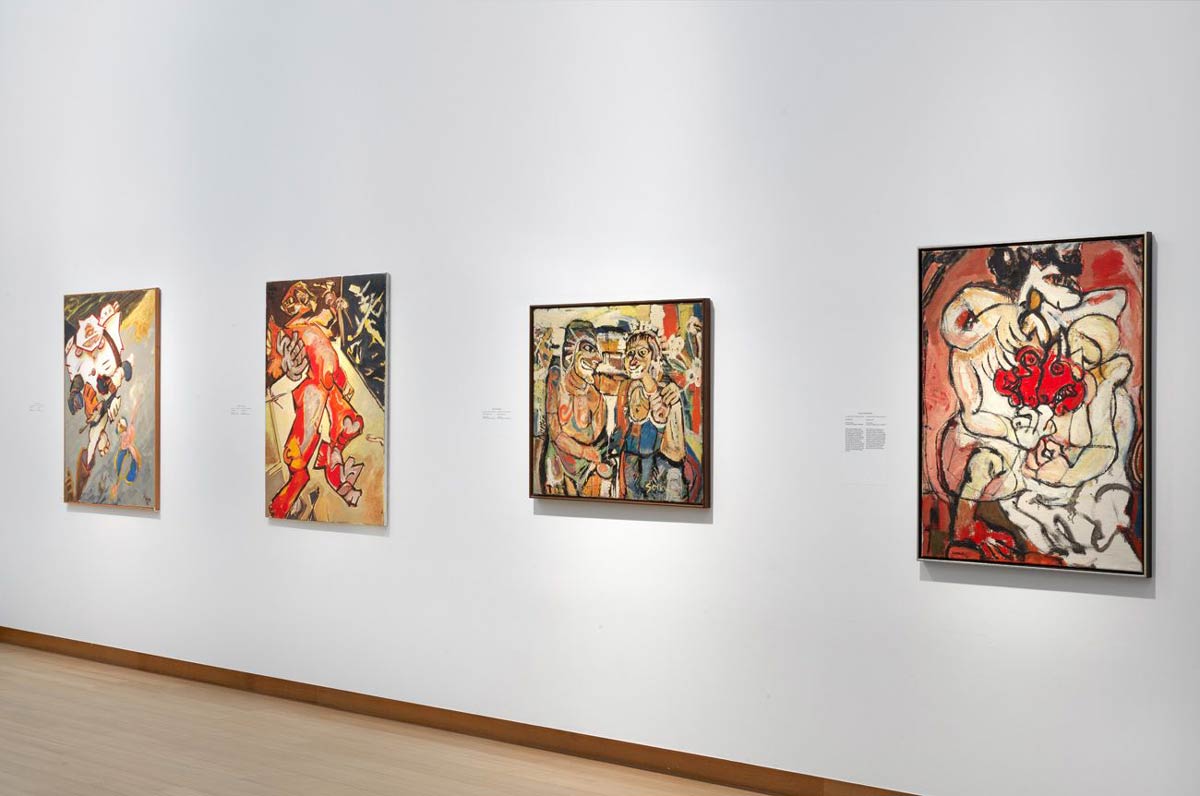
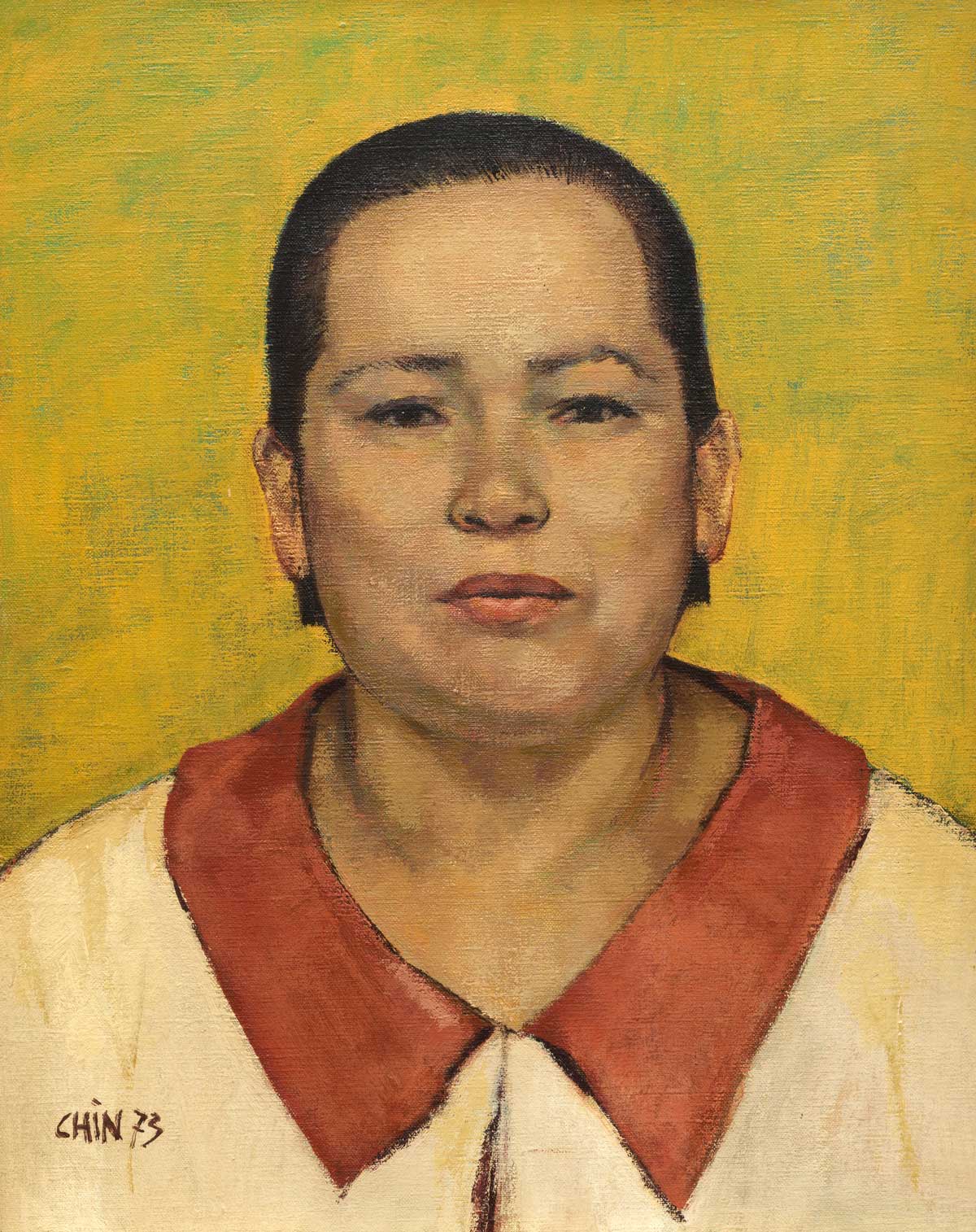
The key to reading this exhibition, overall, works in the way it demonstrates an explicitly decolonizing agenda. It rejects and accepts and feels at home. It is faithfully Dutch with a Surinamese swagger. The works of Armand Baag insistently explore the theme of marronage—both historically/literally and figuratively—in an Afro-futuristic key. These works, with their images of Maroons fighting, fleeing into the interior, and being buried with honors, hauntingly foreshadow the brutal state repression of Suriname’s Maroon minority under the Bouterse regime beginning in 1986. Like Wim Bos Verschuur, Baag was more than just a visual artist, expressing himself also as a dancer, poet, singer, musician, and composer (of songs, musicals, cabaret, and film scores). Quintus Jan Telting’s work contains rich allusions to the suffering of the Black diaspora, using motifs such as white crosses in reference to the Klu Klux Klan and allusions to American jazz singer Billie Holliday’s haunting song Strange Fruit. In much the same way the work of Soeki Irodikromo is enriched by motifs inspired by his Javanese heritage. Erwin de Vries’ Het magische oog transfers the brooding power of traditional African sculpture to the medium of oil painting. Noni Lichtveld’s Maroon Madonna and Child engages in a dramatic decolonizing dialectic with a staple of the Western painting tradition. Leo Glans’ The Banana Plantation demonstrates a naive love of Surinamese nature which recalls Dutch Post-Impressionist artist Van Gogh. The photorealism of Jules Chin A. Foeng puzzles and delights in equal measure. In their striving to create a distinctively Surinamese cultural identity, these artists express themselves eclectically, drawing upon multiple influences. One uniting factor is the handful of activist groups and cultural associations such as Bos Verschuur’s baas in eigen huis (“master in one’s own house”) and Wie Eegie Sani (WES, “Our Own Thing”) to which many of these artists belonged and which served as fora in which they could exchange ideas. The spiritual impetus which these groups gave to the movement for artistic self-realization progressed the cause of essentialization of which this exhibition is a vital testimony. The Surinamese School at the Stedelijk Museum Amsterdam is thus an affirmation of Suriname’s cultural self-realization. The artists featured in this exhibition mined a rich seam to uncover their own visual language. The defy monolithic classification and define themselves within themselves as individuals with hybrid influxes in the milieu of diverse cultures.
What is documented, studied, and archived is what is valued. Surinamese School has embraced the contributions and readings of the curators, researchers, and artists with a diverse background. By doing so, the Stedelijk Museum Amsterdam has not only affirmed Suriname’s artistic essentialization, but it has also laid the groundwork for institutional understanding of these artists as individuals searching for meaning and believing in a future at a most uncertain time. They are part of the Dutch canon and the Stedelijk Museum Amsterdam has, through this exhibition, taken the first step into rehabilitating these artists into the canon of Dutch art—where they rightfully belong.
[i] Encyclopaedia Britannica, ‘Suriname’ by Henk E. Chin, Associate Professor of Economics, University of Amsterdam, Last updated on March 10, 2021.