• Journal
    • Journal Issues
      • Current Issue – Issue #14
      • Issue #13
      • Issue #12
      • Archive
    • About the Journal
      • Aims and Scope
      • Author Guidelines
      • People
      • Ethics
    • Journal Search
      • Search all Journal Articles
  • Projects
    • Research Projects
      • Stedelijk Studies Masters
      • Mortality as Matter
      • Here for Now, Then and There
      • Sketches For The Future
      • Lines of Sight
      • Staff Shares
      • Rakurs
    • Fellowships
      • MMCA Studies x Stedelijk Studies Editorial Fellowship
      • Stedelijk x C& Editorial Fellowship
      • Editorial & Research Fellowships & Fellows
    • Exhibitions
      • MODERN — Van Gogh, Rietveld, Léger and others
      • Exhibition Felix de Rooy — Apocalypse
      • IT’S OUR F***ING BACKYARD
      • Surinamese School
    • Szine
      • Szine is an irregularly published zine that shares pressing research on the subjectivity of the museum in the cultural landscape
    • All projects
      • Ranging from brisk exhibitions to long-term research initiatives, encompassing Szine and Stedelijk Museum Fellowships
  • Research Logs
  • Essays
  • Conversations
  • About
    • About Stedelijk Studies
    • Collaborations
    • People
    • Contact
  • Search
  • Menu Menu
  • Link to Instagram Link to Instagram Link to Instagram
  • Performance by Nasam Aboud during the final presentation of the project ‘Give us the Museum,’ 2018, Stedelijk Museum Amsterdam. Photograph: Maarten Nauw.

  • Oussama Diab during the project ‘Give us the Museum,’ 2018, Stedelijk Museum Amsterdam. Photograph: Maarten Nauw.

  • Performance by Jeroen Herkens during the final presentation of the project ‘Give us the Museum,’ 2018, Stedelijk Museum Amsterdam. Photograph: Maarten Nauw.

  • Saéd Fanari and Betul Ellialtioglu during ‘Give us the Museum,’ 2018, Stedelijk Museum Amsterdam. Photograph: Maarten Nauw.

  • The group of artists involved in ‘Give us the Museum,’ 2018, Stedelijk Museum Amsterdam. Photograph: Maarten Nauw.

Previous Previous PreviousNext Next Next
12345
Click here for more information about the project Give us the Museum (1 May – 1 June 2018).
PDF

Theme: Towards a Museum of Mutuality

*CLOSED*

THEME OUTLINE

Engendering integration while acknowledging differences is one of the biggest challenges facing museums globally today. Institutions must reconceptualize the relationship between their collections and the engagement with (new) audiences at all levels. In response, there has been a shift in the museum model, both theoretically and on the level of institutional arrangements, from the museum as a site of authority to the post-museum as a site of mutuality (Falk, 2012). The act of curating at its most basic is about connecting different concepts and cultures, and bringing their elements into proximity with each other in order to create innovative ways of seeing that counter social injustice and promote equity on all possible levels. Beyond the museum as “contact zone” (Clifford, 1997), and following Terry Smith (2012), the curatorial turn is interested in exploring new contexts and relationships, and working with an artifact’s ability to reveal hidden knowledge. Museums have become spaces for knowledge creation (Hein, 1998; Hooper-Greenhill, 1999) as well as agents of social regeneration and vehicles of broad social change (Sandell, 1998). Similarly, feminist and postcolonial researchers and museum practitioners seek to decentralize the universal, Western epistemological logic as only one way of seeing things. The striking concordance between these two fields speaks to the need for setting up knowledge networks that bridge different epistemologies, iconographies and vocabularies (Mbembe, 2016). These diasporic networks by implication also affect museums everywhere when it comes to issues of representation, inclusion, and exclusion.

Debates around the place of the audience and the social role of the museum have emerged since the advent of new museology (Vergo, 1989; Sandell, 1998). More recently, sponsors and policy makers have demanded that museums become radically shared public spaces and that they play an important role in social cohesion through increased accessibility and public participation (Belfiore, 2009; Lynch, 2011; McSweeney and Kavanagh, 2016). However, it is only relatively recently that museums around the world have begun to recognize the powerful role of displays and exhibitions in the process of lifelong learning and transnational identity constitution (Falk, 2012; Levitt, 2015; Clover, 2015). Museums have the potential, as Borg and Mayo explain, to be “conceived of as sites of struggle, of cultural contestation and renewal” (2010). Acknowledging that objects tell different stories to different audiences­­— some of which may be contradictory—and that these differences need to be excavated through innovative curatorial and educational practices, raises important questions that must be addressed at the global level.

This special issue of Stedelijk Studies aims to frame and interconnect these current movements towards making museums spaces of mutuality. We welcome both theoretical contributions and more practice-based research focussing on questions such as:

  • In our contemporary global world, what kinds of citizens are museums creating?
  • How can nationalism and cosmopolitanism be brought together under museum roofs in different cities and nations around the globe?
  • How is this new imperative of exposing multiple voices and representation impacting exhibition culture(s) and the position of the expert in museums?
  • How are institutions negotiating issues of public agency and empowerment?

The issue, titled Towards a Museum of Mutuality, will be edited by Prof. Dr. Rosemarie Buikema, Prof. Dr. Emilie Sitzia, Dr. Margriet Schavemaker, Rosa Wevers, and Vasso Belia.

STEDELIJK STUDIES

Stedelijk Studies is a high-quality, peer-reviewed academic journal which publishes research related to the collection and on the institutional history of the Stedelijk Museum Amsterdam, museum studies (such as education and conservation practice), and current topics in the field of visual arts and design.

SUBMISSION

Deadline for the abstract is September 30, 2018.

Deadline for the essay is December 15, 2018.

Publication of the issue is May, 2019.

Manuscripts and manuscript proposals, as well as abstracts and other editorial correspondence, should be sent to:

Esmee Schoutens
Managing Editor Stedelijk Studies
[email protected]

Van Baerlestraat 31
1071 AN Amsterdam
Postal address:
Postbus 75082
1070 AB Amsterdam

Call for Papers Archive
Stedelijk Studies Masters 2026
May 1, 2026/by Stedelijk

Call for Submissions: Stedelijk Studies Masters 2026

Stedelijk Studies #15: Audiences for Contemporary Art Museums
June 13, 2024/by Stedelijk

Call for Research  Stedelijk  Studies Journal  #15

Submission deadline: September 2, 2024
Stedelijk Studies Master’s Research
May 1, 2024/by Stedelijk

Stedelijk Studies Masters

Stedelijk Studies is currently welcoming Master’s Theses on and relating to the Stedelijk Museum Amsterdam and its collection.
FANDANGOS NR. 6 Creators: Raul Marroquin - editor, Marjo Schumans - editor, Agora Studio - publisher, Jan van Eyck Academie - printer. Donation Artists' Books Johan Deumens, Landgraaf.
December 19, 2022/by Stedelijk

Call for Research  Stedelijk  Studies Journal  #14

Submission deadline:  March 20, 2023
AnnaMaria Pinaka, “untitled” (part of series Thirsty Pig), 2022. Ink and watercolors. Photo by AnnaMaria Pinaka.
July 26, 2022/by Stedelijk

Call for Research  Stedelijk  Studies Journal  #13

*CLOSED*
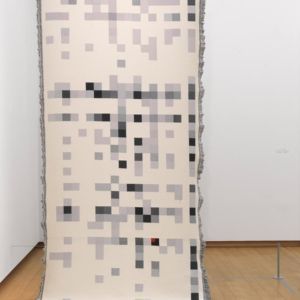
Design by Rossella Biscotti, executed by Textiellab Tilburg, 10 x 10 (Acquired Nationality), 2014. Stedelijk Museum Amsterdam, object no. 2015.1.0418(1-2).
January 31, 2022/by Stedelijk

Call for Research  Stedelijk  Studies Journal  #12

*CLOSED*
Figure 3b. Detail
December 11, 2020/by Stedelijk

Call for Papers – Stedelijk Studies Spring 2021

*CLOSED*
Stedelijk Studies Spring 2020 – Call for Papers
May 6, 2019/by Editor

Stedelijk Studies Spring 2020 – Call for Papers

*CLOSED*
January 15, 2019/by Editor

Stedelijk Studies Fall 2019 – Call for Papers

*CLOSED*
July 10, 2018/by Editor

Stedelijk Studies Summer 2019 – Call for Papers

*CLOSED*
November 17, 2017/by Editor

Stedelijk Studies Summer 2018 – Call for Papers

*CLOSED*
January 13, 2017/by Editor

Stedelijk Studies Summer 2017 – Call for Papers

*CLOSED*
February 1, 2015/by Stedelijk

Stedelijk Studies Fall 2015 Performance – Call for Papers

*CLOSED*
Photo: Gert-Jan van Rooij
October 28, 2014/by Stedelijk

Stedelijk Studies Fall 2016 – Call for Papers

*CLOSED*

Yayoi Kusama

YAYOI KUSAMA
PRE-SALE NOW LIVE
Exhibition — Sep 11, 2026 till Jan 17, 2027

Newsletter

Subscribe to Stedelijk Museum’s Academic Newsletter.

Share this page

  • Facebook Facebook Share on Facebook
  • Whatsapp Whatsapp Share on WhatsApp
  • Pinterest Pinterest Share on Pinterest
  • Linkedin Linkedin Share on LinkedIn

Stedelijk Studies on Instagram

Connect to Stedelijk Studies on Instagram

Subscribe to the Stedelijk Museum Academic Newsletter

Get the latest research, insights, and updates from Stedelijk Studies. Subscribe to the Stedelijk Museum’s Academic Newsletter.

© 2026 Stedelijk Studies.
  • Link to Instagram Link to Instagram Link to Instagram
  • Disclaimer
  • Colophon
  • Contact
  • Cookie Policy
  • Privacy Statement
Scroll to top Scroll to top Scroll to top
Stedelijk Studies
Manage Consent
To provide the best experiences, we use technologies like cookies to store and/or access device information. Consenting to these technologies will allow us to process data such as browsing behavior or unique IDs on this site. Not consenting or withdrawing consent, may adversely affect certain features and functions.
Functional Always active
The technical storage or access is strictly necessary for the legitimate purpose of enabling the use of a specific service explicitly requested by the subscriber or user, or for the sole purpose of carrying out the transmission of a communication over an electronic communications network.
Preferences
The technical storage or access is necessary for the legitimate purpose of storing preferences that are not requested by the subscriber or user.
Statistics
The technical storage or access that is used exclusively for statistical purposes. The technical storage or access that is used exclusively for anonymous statistical purposes. Without a subpoena, voluntary compliance on the part of your Internet Service Provider, or additional records from a third party, information stored or retrieved for this purpose alone cannot usually be used to identify you.
Marketing
The technical storage or access is required to create user profiles to send advertising, or to track the user on a website or across several websites for similar marketing purposes.
  • Manage options
  • Manage services
  • Manage {vendor_count} vendors
  • Read more about these purposes
View preferences
  • {title}
  • {title}
  • {title}