• Journal
    • Journal Issues
      • Current Issue – Issue #14
      • Issue #13
      • Issue #12
      • Archive
    • About the Journal
      • Aims and Scope
      • Author Guidelines
      • People
      • Ethics
    • Journal Search
      • Search all Journal Articles
  • Projects
    • Research Projects
      • Stedelijk Studies Masters
      • Mortality as Matter
      • Here for Now, Then and There
      • Sketches For The Future
      • Lines of Sight
      • Staff Shares
      • Rakurs
    • Fellowships
      • MMCA Studies x Stedelijk Studies Editorial Fellowship
      • Stedelijk x C& Editorial Fellowship
      • Editorial & Research Fellowships & Fellows
    • Exhibitions
      • MODERN — Van Gogh, Rietveld, Léger and others
      • Exhibition Felix de Rooy — Apocalypse
      • IT’S OUR F***ING BACKYARD
      • Surinamese School
    • Szine
      • Szine is an irregularly published zine that shares pressing research on the subjectivity of the museum in the cultural landscape
    • All projects
      • Ranging from brisk exhibitions to long-term research initiatives, encompassing Szine and Stedelijk Museum Fellowships
  • Research Logs
  • Essays
  • Conversations
  • About
    • About Stedelijk Studies
    • Collaborations
    • People
    • Contact
  • Search
  • Menu Menu
  • Link to Instagram Link to Instagram Link to Instagram
Previous Previous PreviousNext Next Next
123
Open image in lightbox: The dream of a 1000 shipwrecks 02 Open image in lightbox: The dream of a 1000 shipwrecks 02
Open image in lightbox: The dream of a 1000 shipwrecks 01A Open image in lightbox: The dream of a 1000 shipwrecks 01A
Open image in lightbox: The dream of a 1000 shipwrecks 03 Open image in lightbox: The dream of a 1000 shipwrecks 03
Follow a manual added link
Feather Feather

ARTIST’S TEXT

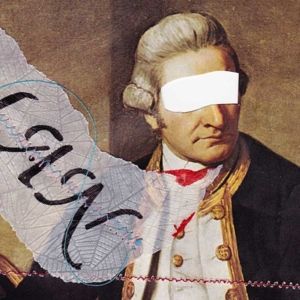
In the artist’s words: The dream of a 1000 shipwrecks

by Patricia Kaersenhout

“‘Fuck off to your island!’ That’s what they said to me when I was a child, and later as an adult. But which island? Where is it, and how do I get there?”

“The work consists of 144 pages from academic books written from a Western modernist perspective. I tore the pages from the books, adapted them and rearranged them around the theme of the sea and ships. This was my attempt to desanctify the so-called ‘Western knowledge’ that ignores the voices of my ancestors.”

“Two texts by William Shakespeare run through the works.”

The first comes from Hamlet:

What a piece of work is a man! how Noble in

Reason! how infinite in faculty! in form and moving

how expresse and admirable? in Action, how like an Angel!

in apprehension, how like a God!

The beauty of the world, the paragon of animals—and yet,

to me, what is this quintessence of dust? Man delights not me—nor woman neither, though by your smiling you seem to say so.

When Hamlet poses the question directly to Rosencrantz and Guildenstern in his speech he is engaging with a deeply existential matter. He is saying, ‘A man is in fact nothing more than a heap of dust; he is insignificant.’

The second extract, from The Tempest, is spoken by Prospero:

Our revels now are ended. These our actors,
As I foretold you, were all spirits, and
Are melted into air, into thin air:
And like the baseless fabric of this vision,
The cloud-capp’d tow’rs, the gorgeous palaces,
The solemn temples, the great globe itself,
Yea, all which it inherit, shall dissolve,
And, like this insubstantial pageant faded,
Leave not a rack behind. We are such stuff
As dreams are made on; and our little life
Is rounded with a sleep.


“In The Tempest, Shakespeare portrays the Caliban character as a ferocious, terrifying ‘beast’, and as Prospero’s slave. Shakespeare presents Caliban as a lesser creature. Prospero symbolizes the Western power that dominates an island and its inhabitants, while Caliban represents the island dweller who is dominated by the Westerner. Caliban represents the indigenous islander who cannot escape the cruelty of their master.

Shakespeare reinforces the notion that Caliban embodies the image constructed by contemporary Western civilization of the people of the Caribbean islands as monsters and deformed creatures. But by speaking, Caliban is transformed into a person with thoughts, and with human emotions.

At the end of the play, Caliban transcends his master. With this, Shakespeare turns the enslaved person into the victor. The author wanted the reader to see ​​Caliban in a new light at the close of the play.”

Patricia Kaersenhout
April 2021

The Dream of a 1000 Shipwrecks is currently on view as part of Tomorrow is a Different Day, the new collection display of the Stedelijk Museum Amsterdam. This is the full version of the artist text excerpted in the display.

This article is tagged with:
artist practices (33)material culture (25)the netherlands (93)visual arts (19)

More about Tomorrow is a different day

HITO STEYERL I WILL SURVIVE Tentoonstelling — 29 jan t/m 12 jun 2022
July 1, 2021/by Stedelijk

In the artist’s words: Barricade

by Esiri Erheriene-Essi
The dream of a 1000 shipwrecks 01
July 1, 2021/by Stedelijk

In the artist’s words: The dream of a 1000 shipwrecks

by Patricia Kaersenhout

Now at the Stedelijk

Erwin Olaf - Freedom

Erwin Olaf – Freedom

Newsletter

Subscribe to Stedelijk Museum’s Academic Newsletter.

Share this page

  • Facebook Facebook Share on Facebook
  • Whatsapp Whatsapp Share on WhatsApp
  • Pinterest Pinterest Share on Pinterest
  • Linkedin Linkedin Share on LinkedIn

Stedelijk Studies on Instagram

Connect to Stedelijk Studies on Instagram

Subscribe to the Stedelijk Museum Academic Newsletter

Get the latest research, insights, and updates from Stedelijk Studies. Subscribe to the Stedelijk Museum’s Academic Newsletter.

© 2025 Stedelijk Studies.
  • Link to Instagram Link to Instagram Link to Instagram
  • Disclaimer
  • Colophon
  • Contact
  • Cookie Policy
  • Privacy Statement
Scroll to top Scroll to top Scroll to top
Stedelijk Studies
Manage Consent
To provide the best experiences, we use technologies like cookies to store and/or access device information. Consenting to these technologies will allow us to process data such as browsing behavior or unique IDs on this site. Not consenting or withdrawing consent, may adversely affect certain features and functions.
Functional Always active
The technical storage or access is strictly necessary for the legitimate purpose of enabling the use of a specific service explicitly requested by the subscriber or user, or for the sole purpose of carrying out the transmission of a communication over an electronic communications network.
Preferences
The technical storage or access is necessary for the legitimate purpose of storing preferences that are not requested by the subscriber or user.
Statistics
The technical storage or access that is used exclusively for statistical purposes. The technical storage or access that is used exclusively for anonymous statistical purposes. Without a subpoena, voluntary compliance on the part of your Internet Service Provider, or additional records from a third party, information stored or retrieved for this purpose alone cannot usually be used to identify you.
Marketing
The technical storage or access is required to create user profiles to send advertising, or to track the user on a website or across several websites for similar marketing purposes.
  • Manage options
  • Manage services
  • Manage {vendor_count} vendors
  • Read more about these purposes
View preferences
  • {title}
  • {title}
  • {title}
